
McLaren brake repair is essential for maintaining the stopping performance, handling confidence, and safety of a high-performance supercar. McLaren vehicles are engineered to deliver exceptional acceleration and precise control, which means their braking systems must perform reliably under demanding driving conditions. Whether you drive a McLaren 570S, 720S, Artura, GT, or another model, unusual brake noises, vibrations, or changes in pedal response should never be ignored.
Dubai offers a unique driving environment for supercar owners. High temperatures, congested roads, frequent stop-and-go traffic, and occasional spirited driving can all influence brake wear and operating conditions. Although McLaren braking systems are designed for performance, brake pads, discs, fluid, and other components still require appropriate inspection and maintenance.
At AutoStadt Motor Services, the focus of McLaren brake repair is to identify the cause of a braking concern and recommend a suitable solution for the vehicle’s model, equipment, and condition. A brake noise, for example, does not always mean the pads need replacing. Similarly, a vibration under braking may indicate disc-related problems, uneven pad deposits, or another mechanical issue.
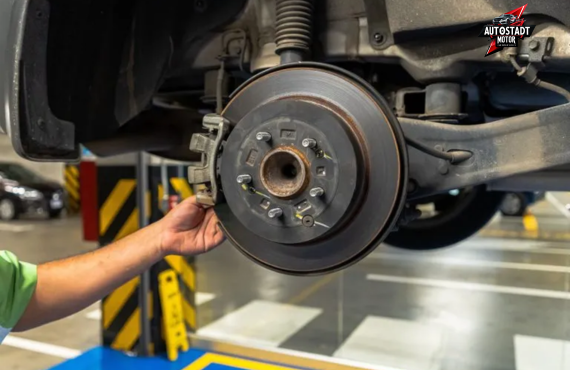
A thorough inspection helps distinguish normal characteristics of a performance braking system from symptoms that require attention. It also helps owners avoid unnecessary component replacement while maintaining dependable braking performance on Dubai roads.
Signs Your Car Needs McLaren Brake Repair
Brake problems can develop gradually or appear suddenly. Recognizing the warning signs early allows the vehicle to be inspected before a minor issue develops into a more serious concern.
1. Squealing, Grinding, or Unusual Brake Noise
A high-pitched squeal may occur when brake pads approach their wear limit or when certain pad materials interact with the brake discs. Performance-oriented brake pads can also produce some noise under particular operating conditions.
However, persistent squealing should not automatically be dismissed as normal supercar behaviour. Grinding sounds are particularly concerning because they can indicate severe pad wear or metal-to-metal contact.
During McLaren brake repair, the technician should inspect the pads, discs, hardware, and related components to determine whether the noise reflects normal operation or an actual fault.
2. Steering Wheel or Brake Pedal Vibration
If your McLaren shakes when you apply the brakes, the braking system needs assessment.
Vibration may result from disc thickness variation, uneven friction deposits, excessive runout, or other mechanical problems. Suspension or wheel-related issues can sometimes produce similar symptoms, so the source should be confirmed before replacing parts.
A noticeable vibration at higher speeds deserves particular attention because it can affect driving confidence and indicate that the braking system is not operating as intended.
3. Increased Stopping Distance
A vehicle that takes longer than usual to slow down may have a problem involving the brake pads, discs, hydraulic system, tyres, or other components.
Reduced braking performance can also occur if the brakes become excessively hot during demanding use. This is particularly important for performance vehicles, where repeated hard braking can generate substantial heat.
If stopping performance has changed, arrange an inspection and avoid high-speed driving until the issue has been assessed.
4. Soft, Spongy, or Unusually Hard Brake Pedal
Brake pedal feel provides valuable information about system condition.
A soft or spongy pedal can indicate air in the hydraulic system, a fluid leak, or another hydraulic fault. A pedal that suddenly feels unusually hard may point toward a brake assistance problem or another system issue.
Neither symptom should be ignored. If the pedal sinks toward the floor, braking assistance changes significantly, or the vehicle becomes difficult to stop, do not continue driving it. Arrange professional assistance instead.
5. Brake Warning Lights on the Dashboard
Modern McLaren vehicles use electronic systems to monitor various vehicle functions. Depending on the model and warning, a dashboard alert may relate to brake fluid, pad wear, the parking brake, or an electronic braking or stability-control system.
The warning should be interpreted according to the vehicle’s documentation and diagnostic information. Simply clearing the message without investigating the cause can leave the original fault unresolved.
6. Uneven Brake Pad Wear
Brake pads should be inspected for wear patterns as well as remaining thickness.
If one pad wears considerably faster than another, possible causes include caliper problems, restricted movement, uneven loading, or other component issues. Replacing the pads without investigating the uneven wear may allow the same problem to return.
7. Burning Smell or Excessive Brake Heat
A strong burning smell after braking can indicate excessive heat, a dragging brake, or another issue requiring inspection. Although brakes naturally become hot during operation, unusual heat combined with smoke, persistent odour, or reduced stopping power should be treated seriously.
Stop in a safe location and seek professional assistance if the brakes appear to be overheating.
Why Choose AutoStadt Motor Services for McLaren Brake Repair
A high-performance braking system requires more than a quick visual check. The correct repair depends on the vehicle’s specification, the condition of its components, and the symptoms reported by the driver.
Careful Inspection Before Replacing Parts
At AutoStadt Motor Services, a diagnostic approach helps identify the source of a braking concern before a repair is recommended.
The inspection may include brake pad thickness, disc condition, caliper operation, visible fluid leaks, hydraulic components, wear sensors, and relevant warning messages. Where appropriate, diagnostic equipment may also be needed to investigate electronic braking or stability-control faults.
This process helps distinguish between worn consumables and underlying mechanical or electronic problems.
Attention to McLaren-Specific Requirements
McLaren models do not all use identical braking components. Equipment can vary by model, year, trim, market specification, and optional performance packages.
Some vehicles may have carbon-ceramic brake systems, while others may use different disc and pad configurations. These systems have different inspection requirements, operating characteristics, and replacement considerations.
For that reason, component selection should be based on the vehicle’s exact specification rather than its brand name alone.
Suitable Brake Pads and Discs
Brake pads and discs work together to convert vehicle motion into heat through friction. Their condition and compatibility influence braking response, noise, wear, and thermal performance.
The right replacement parts must match the vehicle’s requirements and intended use. Installing an unsuitable pad compound or an incompatible disc can compromise performance or create avoidable noise and wear.
AutoStadt Motor Services can assess the affected components and help determine an appropriate repair approach.
Hydraulic Brake System Assessment
Brake fluid transfers force through the hydraulic system. Over time, fluid condition can deteriorate, particularly when exposed to repeated high temperatures.
A suitable maintenance schedule helps maintain reliable braking operation. Fluid inspection and replacement should follow the manufacturer’s specifications, including the correct fluid type and service procedure.
If a leak or hydraulic fault is suspected, simply topping up the reservoir is not an adequate repair.
Professional Service for Dubai Supercar Owners
Owners of McLaren vehicles expect precise handling and predictable braking performance. The same principle applies when maintaining other premium vehicles, including the BMW M series, Mercedes-AMG models, Porsche 911, and Audi R8.
Although these cars have different braking systems, they share a need for correct component selection and vehicle-specific maintenance.
AutoStadt Motor Services aims to provide a clear explanation of the diagnosed issue, the recommended work, and the checks required after the repair.
How Our McLaren Brake Repair Process Works
A structured repair process helps ensure that the original complaint is addressed and that the braking system is checked after work is completed.
Step 1: Discuss the Symptoms
The process begins with the driver’s description of the problem.
The technician may ask whether the brakes squeal when cold, vibrate at higher speeds, feel different after prolonged driving, or produce a dashboard warning. Information about recent servicing or replacement parts can also help narrow down possible causes.
These details provide a starting point for the inspection rather than a substitute for it.
Step 2: Inspect the Braking Components
The relevant wheels and braking components are inspected according to the vehicle’s requirements.
This may include brake pad thickness, disc condition, caliper movement, visible hydraulic leaks, hoses, and wear indicators. The technician also considers whether the observed wear is consistent across the relevant components.
Where carbon-ceramic discs are fitted, their condition must be assessed using appropriate procedures because their inspection requirements differ from those of conventional iron discs.
Step 3: Carry Out Diagnostic Checks
If the vehicle displays a warning or has an electronic braking concern, diagnostic checks may be required.
Depending on the symptoms, this can involve examining fault codes, relevant sensors, electronic parking brake operation, or stability-control functions.
The purpose is to identify faults that may not be visible during a basic physical inspection.
Step 4: Confirm the Required Repair
After reviewing the findings, the technician determines which components need attention.
The solution might involve replacing worn brake pads, addressing disc-related problems, servicing a caliper, correcting a hydraulic leak, or investigating an electronic fault. In some cases, more than one issue may contribute to the symptoms.
The recommended work should address the confirmed cause instead of replacing every related component automatically.
Step 5: Complete the Repair Correctly
The repair is carried out using components and procedures appropriate to the vehicle.
Where pads or discs are replaced, the relevant fitment requirements and installation procedures must be followed. If the hydraulic system has been opened, the correct bleeding procedure may be necessary. Electronic systems may also require specific service steps, depending on the repair.
This attention to detail helps maintain consistent brake operation.
Step 6: Perform Final Checks
After the work, the braking system should be checked to confirm that the repair has addressed the original problem.
The final checks depend on the repair performed and may include pedal feel, fluid level, warning messages, component installation, and an appropriate functional test. Any road test should take place only when the vehicle is safe to operate.
The aim is to verify the repair rather than assume that replacing a component has automatically resolved every symptom.
McLaren Brake Maintenance Tips for Dubai Driving Conditions
Preventive maintenance is particularly valuable for performance vehicles because brake condition can change with driving style, mileage, temperature, and component type.
First, pay attention to changes in brake feel. New vibration, unusual noise, or a different pedal response should be investigated rather than ignored.
Second, arrange inspections according to the manufacturer’s maintenance guidance and the vehicle’s actual use. A McLaren driven mainly through urban traffic may experience a different pattern of brake wear from one used regularly for high-performance driving.
Third, allow for appropriate cooling after demanding use. Repeated heavy braking produces substantial heat, and parking immediately after strenuous driving may affect how heat dissipates. Follow the vehicle manufacturer’s recommendations for performance driving and post-use care.
Fourth, do not assume that every squeal requires new brake pads. Some noise can be related to pad material, temperature, moisture, or surface deposits. Nevertheless, persistent noise or noise accompanied by reduced performance should be checked.
Finally, use parts and brake fluid that meet the requirements for your specific model. Maintenance procedures for a McLaren should not be selected by copying those used on a standard Toyota or Nissan, because component designs and performance requirements can differ considerably.
Frequently Asked Questions About McLaren Brake Repair in Dubai
1. How much does McLaren brake repair cost in Dubai?
The cost depends on the model, braking system, condition of the components, and type of repair required. Replacing worn pads is generally a different job from replacing discs, servicing calipers, or repairing a hydraulic or electronic fault. Carbon-ceramic systems can also have substantially different parts and inspection requirements compared with conventional brakes. An inspection at AutoStadt Motor Services can help establish the actual problem and the appropriate repair scope before work proceeds.
2. How do I know when my McLaren brake pads need replacement?
Common indicators include a pad-wear warning where fitted, reduced pad thickness, persistent squealing, or a change in braking performance. However, noise alone does not always mean the pads have reached their wear limit. Pad condition should be checked against the specifications for the particular McLaren model, and the discs should be inspected at the same time. Replacing pads without checking the rest of the braking system may overlook a separate issue.
3. Do McLaren carbon-ceramic brakes need special maintenance?
Carbon-ceramic brakes have different characteristics from conventional iron-disc systems and require model-appropriate inspection procedures. Their condition should not be judged using assumptions intended for standard discs. Depending on the vehicle and usage, the inspection may need to consider the disc surface, wear limits, damage, pads, and manufacturer-specific criteria. Correct handling and compatible replacement components are important, so owners should follow the service requirements for their exact braking system.
4. Why do my McLaren brakes vibrate when I slow down?
Brake vibration can be associated with disc thickness variation, uneven friction deposits, excessive runout, or other mechanical issues. In some cases, a problem involving tyres, wheels, or suspension components can create similar sensations. The speed at which vibration occurs and whether it is felt through the pedal, steering wheel, or body can help guide diagnosis. A physical inspection is needed to identify the source before deciding whether the discs, pads, or another component requires attention.
5. How often should I service my McLaren braking system in Dubai?
There is no single interval suitable for every McLaren because maintenance needs depend on the model, manufacturer’s recommendations, mileage, driving conditions, and use of the vehicle. Regular inspection should form part of scheduled servicing, while demanding driving may justify more frequent checks. Brake fluid should be maintained according to the specified service schedule, and pads and discs should be inspected for condition and wear. If you notice a warning light, fluid leak, soft pedal, grinding noise, or reduced braking performance, arrange an assessment immediately rather than waiting for the next scheduled service.
Conclusion
McLaren brake repair plays a vital role in preserving the stopping performance and driving confidence expected from a high-performance vehicle. Warning signs such as grinding, persistent squealing, vibration, reduced braking response, and dashboard alerts should be investigated promptly.
The correct repair depends on the source of the problem and the braking system fitted to the vehicle. From brake pads and discs to calipers, hydraulic components, and electronic controls, every repair should be based on proper inspection and model-specific requirements.
AutoStadt Motor Services offers professional automotive repair support for drivers seeking McLaren brake inspection and maintenance in Dubai. By identifying the cause of the problem, selecting suitable components, and checking the system after repair, the workshop can help owners make informed maintenance decisions.
If your McLaren is showing signs of brake wear or unusual braking behaviour, arranging an inspection is a practical step toward maintaining reliable performance and safe driving on Dubai roads.


Leave a Comment