
McLaren suspension repair is essential when your supercar develops unusual noises, changes in ride height, uneven tyre wear, or handling that no longer feels precise. McLaren vehicles are engineered for exceptional performance, combining powerful engines with advanced suspension systems designed to balance road comfort, cornering stability, and control. When any part of this system develops a fault, the difference can be noticeable even during an ordinary drive through Dubai.
Unlike conventional vehicles, many McLaren models feature sophisticated suspension technology, with certain models using adaptive damping and advanced hydraulic systems. Depending on the model and specification, these systems may include electronically controlled dampers, hydraulic components, suspension sensors, control modules, and specialised components that work together to maintain vehicle stability. Therefore, identifying the actual cause of a suspension problem requires more than a quick visual inspection.
Dubai’s driving conditions also make suspension maintenance important. Speed bumps, uneven road surfaces, parking ramps, frequent stop-and-go traffic, and high temperatures can place demands on different vehicle components. Although McLaren vehicles are designed for demanding performance, they still require appropriate inspection and maintenance to preserve their handling characteristics.
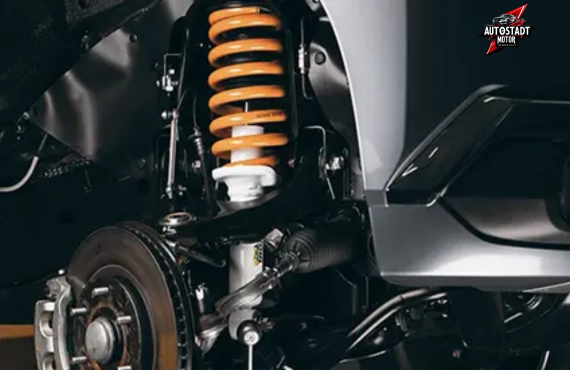
At AutoStadt Motor Services, McLaren suspension repair begins with identifying the symptoms, assessing the affected components, and determining the most suitable repair approach. Whether your vehicle has a suspension warning, an unusual knocking sound, a change in ride height, or reduced driving comfort, professional diagnosis helps prevent guesswork and unnecessary parts replacement.
The goal is not simply to eliminate a noise or warning light. It is to restore the suspension system’s intended operation, maintain predictable handling, and help protect the vehicle’s tyres and related components.
Signs Your Car Needs McLaren Suspension Repair
Suspension faults do not always appear as a complete failure. In many cases, the vehicle provides early warning signs that become more noticeable over time. Recognising these symptoms can help you arrange an inspection before the problem affects other components.
1. Unusual Knocking or Clunking Sounds
A knocking sound from the front or rear of your McLaren may indicate a problem with a suspension component, mounting, joint, or related connection.
You might hear the noise when driving over a speed bump, entering a sloped driveway, or travelling over an uneven section of road. In some cases, the sound occurs only at low speeds, while other faults become more noticeable during cornering.
However, not every suspension noise comes from the shock absorbers. A proper inspection is needed to distinguish between worn joints, loose hardware, damaged mounts, and other possible causes.
2. Changes in Ride Height
A McLaren that sits unusually low at one corner or appears uneven when parked should be inspected promptly.
Depending on the model, a change in ride height may be associated with a hydraulic suspension issue, a leak, a sensor fault, or another component problem. The cause cannot be confirmed from appearance alone.
Ride-height changes are particularly important on vehicles with advanced suspension systems because an underlying fault may affect ground clearance and the vehicle’s ability to operate as intended.
If the car is sitting abnormally low, avoid driving it over speed bumps or ramps until the cause has been assessed.
3. Suspension Warning Messages
Modern McLaren vehicles use electronic monitoring to identify certain faults in their suspension or vehicle-control systems.
A dashboard warning may indicate a sensor issue, an electronically controlled damper problem, a hydraulic-system fault, or another condition that requires investigation. The exact meaning depends on the warning and the specific model.
Clearing the warning without diagnosing its cause does not resolve the underlying issue. A suitable diagnostic scan, followed by physical inspection where necessary, can help identify the fault.
4. Reduced Stability During Cornering
McLaren vehicles are designed to provide precise handling and a strong connection between the driver and the road. If the vehicle starts leaning differently, feels unsettled through corners, or responds inconsistently to steering inputs, its suspension should be checked.
Potential causes include worn suspension components, damper problems, incorrect wheel alignment, tyre issues, or faults in an electronically controlled suspension system.
Because these symptoms can affect vehicle control, they should not be ignored, particularly if the change is sudden or becomes progressively worse.
5. Excessive Bouncing or a Harsher Ride
If your McLaren begins bouncing more than usual after crossing a road imperfection, a damper or related suspension component may not be operating correctly.
Alternatively, a ride that suddenly becomes unusually firm may be associated with a suspension setting, electronic control issue, or another mechanical fault.
The appropriate response depends on the vehicle’s normal operating characteristics. A McLaren’s performance-oriented suspension may naturally feel firmer than that of a Toyota Camry or Mercedes-Benz E-Class, but a sudden change from its usual behaviour deserves attention.
6. Uneven Tyre Wear
Suspension problems can affect how tyres contact the road. If one tyre wears more quickly along its inner or outer edge, or the tread pattern becomes noticeably uneven, the suspension and wheel alignment should be inspected.
Possible causes include worn suspension joints, damaged components, incorrect alignment settings, or tyre-pressure problems.
Correcting the tyre wear without investigating the cause may only provide temporary improvement. A complete assessment can help determine whether the issue involves the suspension, alignment, tyres, or a combination of factors.
7. Fluid Leakage Around Suspension Components
Fluid around a suspension component can indicate a leak, particularly on vehicles equipped with hydraulic suspension technology.
However, it is important to identify the fluid correctly. Engine oil, coolant, brake fluid, and other automotive fluids can collect in nearby areas and should not automatically be attributed to the suspension.
If you notice fresh fluid beneath your McLaren or around a suspension assembly, arrange an inspection. Do not attempt to operate a potentially compromised hydraulic system without understanding the fault.
Why Choose AutoStadt Motor Services for McLaren Suspension Repair
A high-performance vehicle requires a repair approach that takes its engineering, component design, and intended driving characteristics into account. McLaren suspension repair should therefore be based on accurate diagnosis rather than replacing parts simply because a symptom appears familiar.
Detailed Suspension Diagnosis
At AutoStadt Motor Services, the first priority is to understand what has changed in the vehicle’s behaviour.
The inspection may include checking suspension components, mounts, joints, dampers, visible hydraulic connections, ride height, tyre condition, and relevant electronic warnings. Where appropriate, diagnostic equipment can help identify faults that are not visible during a basic inspection.
This process helps narrow down the cause before a repair recommendation is made.
Model-Specific Repair Considerations
McLaren models can differ significantly in their suspension design and technology. The correct procedure for a 570S may not be identical to the procedure required for a 720S, Artura, or GT.
For that reason, the model year, specification, installed suspension system, and diagnostic findings should guide the repair process.
Attention to Advanced Suspension Technology
Some McLaren vehicles use advanced hydraulic or electronically controlled suspension technology. These systems can involve specialised components and control strategies that require appropriate diagnostic procedures.
A suspension warning should not automatically be treated as a mechanical failure, because the cause may involve a sensor, electrical connection, control system, or hydraulic component.
Likewise, a warning-free dashboard does not guarantee that every suspension component is in perfect condition. Physical inspection remains important when the vehicle exhibits unusual behaviour.
Repair Recommendations Based on Evidence
Replacing a complete suspension assembly when only one component is faulty can lead to unnecessary expense. Conversely, replacing a visibly damaged part without checking related components may leave the original problem unresolved.
AutoStadt Motor Services focuses on identifying the likely source of the problem and recommending repairs that correspond to the inspection findings.
Where specialist procedures, manufacturer-specific tools, or additional technical support are required, these requirements should be established before work proceeds.
Care for Performance and Everyday Driving
A McLaren may be driven regularly through Dubai’s urban roads or used mainly for weekend trips and performance-focused driving. In either situation, suspension condition affects comfort, tyre wear, stability, and predictable handling.
The same principle applies to other premium vehicles, including the BMW M4, Porsche 911, and Audi R8. However, each model has its own engineering requirements, so the repair process should always be specific to the vehicle being inspected.
How Our McLaren Suspension Repair Process Works
A structured repair process makes it easier to understand the fault, choose the appropriate solution, and verify the result.
Step 1: Discuss the Symptoms
The process begins with the driver’s observations.
You may have noticed a suspension warning, a knocking noise, uneven ride height, increased body movement, or a change in handling. Information about when the symptom occurs can help narrow down the possible causes.
For example, a noise over speed bumps may require a different investigation from a warning that appears immediately after starting the vehicle.
Step 2: Inspect the Suspension System
The vehicle is assessed for visible damage, unusual wear, leaking components, loose connections, and other signs of a suspension problem.
The technician may examine the relevant suspension arms, joints, mounts, dampers, and associated components, depending on the model and symptoms.
The inspection also considers tyres and wheel alignment where these could contribute to the reported behaviour.
Step 3: Carry Out Electronic Diagnostics
If the vehicle displays a suspension warning or has an electronically controlled system, a suitable diagnostic scan may be required.
Diagnostic information can help identify stored fault codes, sensor irregularities, or control-system issues. However, fault codes should be interpreted alongside physical findings rather than treated as automatic instructions to replace a component.
Step 4: Identify the Root Cause
Once the inspection and diagnostic results are available, the findings are assessed together.
The issue may involve a worn joint, a damper fault, a hydraulic leak, a sensor problem, or another suspension-related component. In some cases, more than one issue may contribute to the symptoms.
Identifying the root cause helps ensure that the proposed repair addresses the problem rather than simply masking its effects.
Step 5: Complete the Required Repair
After the repair requirements have been established, the appropriate work can be carried out.
Depending on the fault and model, this may involve replacing a worn suspension component, addressing a leak, repairing a connection, or resolving a suitable electronic fault.
Correct parts, appropriate procedures, and model-specific requirements are important, particularly when dealing with advanced suspension technology.
Step 6: Verify the Repair
The final stage involves checking that the repair has addressed the original complaint.
This may include inspecting the repaired area, checking ride height, reviewing relevant diagnostic information, and confirming that the suspension operates as expected. Wheel alignment may also be necessary if suspension components have been replaced or disturbed.
A road test should only be performed when the vehicle is safe to drive and the repair procedure permits it. If the fault affects vehicle stability or safe operation, the car should not be driven until the issue has been addressed.
McLaren Suspension Maintenance Tips for Dubai Drivers
Preventive inspection can help identify suspension wear before it becomes a more serious problem.
First, pay attention to changes in ride height, handling, and unusual sounds. A new knocking noise or a sudden change in suspension firmness should not be dismissed as a normal characteristic of a performance car.
Second, approach steep parking ramps and speed bumps carefully. McLaren vehicles often have low ground clearance, so entering a ramp at an unsuitable angle or speed can increase the risk of underbody or suspension damage.
Third, inspect tyres regularly. Uneven wear can provide useful clues about alignment or suspension condition. Maintaining the correct tyre pressure also supports predictable handling and helps reduce unnecessary tyre wear.
Finally, follow the maintenance requirements appropriate to your model. Suspension inspection intervals and procedures may differ between McLaren models, so generic schedules should not replace the manufacturer’s recommendations.
If your vehicle has a hydraulic or electronically controlled suspension system, any warning or suspected leak should be investigated using suitable procedures. Avoid attempting adjustments or repairs without the necessary technical information.
Frequently Asked Questions About McLaren Suspension Repair in Dubai
1. How do I know if my McLaren needs suspension repair?
Common signs include knocking sounds over uneven roads, a change in ride height, unusual suspension firmness, excessive bouncing, uneven tyre wear, fluid leakage, or a suspension warning message. These symptoms can have different causes, so a professional inspection is needed to confirm the fault. If the vehicle suddenly becomes unstable, sits abnormally low, or develops a severe suspension problem, avoid driving it until it has been assessed.
2. How much does McLaren suspension repair cost in Dubai?
The cost depends on the model, the type of suspension system, the affected component, parts availability, and the labour required. A sensor or connection issue may involve a different repair process from a damaged damper, hydraulic component, or suspension assembly. The most reliable way to estimate the cost is to identify the fault first and then obtain a repair recommendation based on the actual findings.
3. Can I drive my McLaren with a suspension warning light?
A suspension warning should not be ignored. Some warnings may relate to a sensor or electronic control issue, while others may indicate a fault that affects ride height or vehicle stability. The seriousness depends on the specific warning and the vehicle’s behaviour. If the car is unusually low, difficult to control, leaking fluid, or displaying severe handling changes, do not continue driving it. Arrange a professional assessment to determine whether it is safe to move.
4. What causes McLaren suspension problems?
Potential causes include worn suspension joints, damaged mounts, damper faults, hydraulic leaks, sensor problems, electrical issues, road impacts, and normal component wear over time. The cause can vary by model and suspension configuration. Driving over a severe road imperfection may cause damage, while gradual wear can develop without a single obvious incident. Proper diagnosis helps distinguish mechanical problems from electronic or hydraulic faults.
5. How long does McLaren suspension repair take?
Repair time depends on the fault, the accessibility of the affected component, the model’s suspension design, parts availability, and whether specialist diagnostic procedures are required. Some repairs may be completed relatively quickly, while more complex hydraulic or electronically controlled suspension problems can take longer. An accurate timeframe can be provided after the vehicle has been inspected and the repair requirements are understood.
Conclusion
McLaren suspension repair is important for maintaining the handling, ride quality, stability, and performance characteristics that make these vehicles distinctive. Knocking sounds, unusual ride height, warning messages, fluid leaks, and changes in cornering behaviour can all indicate a problem that deserves attention.
For Dubai drivers, early diagnosis can help identify developing faults before they contribute to additional component wear or affect the vehicle’s safe operation. The right repair depends on the particular McLaren model, its suspension technology, and the results of a thorough inspection.
AutoStadt Motor Services offers suspension inspection and repair support for drivers seeking a professional assessment of their vehicle’s suspension concerns. By identifying the underlying cause and recommending an appropriate repair, the aim is to restore dependable operation while avoiding unnecessary parts replacement.
If your McLaren has developed unusual suspension behaviour, arranging an inspection is a sensible next step. Addressing the issue promptly can help protect the vehicle’s components and preserve the confident, controlled driving experience expected from a high-performance supercar.


Leave a Comment