
Mercedes AC repair is essential when your vehicle’s air conditioning struggles to maintain a comfortable cabin temperature, produces unusual noises, or stops cooling consistently. In Dubai, wonditioning, even a small AC fault can quickly become frustrating. Whether you drive a Mercedes-Behere high outdoor temperatures and heavy traffic can place considerable demands on vehicle air cnz C-Class, E-Class, GLE, or S-Class, maintaining reliable cooling helps make daily commutes and longer journeys more comfortable.
Mercedes-Benz vehicles feature sophisticated climate-control systems designed to regulate cabin temperature and airflow. Depending on the model and equipment, these systems may include automatic climate control, multiple temperature zones, electronic sensors, a variable-output compressor, and advanced control modules. Consequently, an AC problem may involve more than low refrigerant or a worn mechanical component.
For instance, warm air from the vents could indicate refrigerant loss, a compressor issue, restricted condenser airflow, or an electrical fault. Similarly, uneven cooling between the driver and passenger sides may point towards a blend-door actuator, sensor, or climate-control problem.
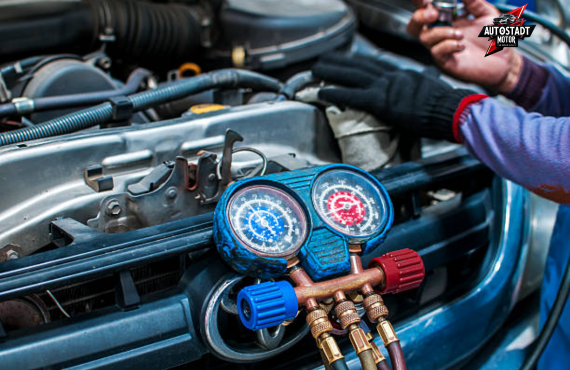
At AutoStadt Motor Services, Mercedes AC repair focuses on identifying the underlying cause of poor cooling and recommending an appropriate solution. Instead of automatically refilling the refrigerant or replacing expensive components, a proper inspection helps determine what the system actually needs. This approach can help Mercedes owners in Dubai maintain dependable cooling while avoiding unnecessary repairs.
Signs Your Car Needs Mercedes AC Repair
Your Mercedes may show several warning signs before its air conditioning stops working completely. Recognising these changes early can make diagnosis easier and help prevent additional component damage.
1. Mercedes AC Blows Warm or Slightly Cool Air
One of the most common reasons drivers seek Mercedes AC repair is a noticeable reduction in cooling performance.
If the system blows warm air even when the temperature is set to its lowest setting, the problem may involve low refrigerant, a refrigerant leak, compressor operation, a condenser restriction, or a faulty control component.
Dubai’s hot weather makes this symptom particularly noticeable. A system that provides acceptable cooling during mild conditions may struggle when the cabin has been exposed to direct sunlight.
However, weak cooling does not automatically mean the compressor has failed. A technician should assess the refrigerant circuit and related components before recommending replacement.
2. Different Temperatures on Each Side of the Cabin
Some Mercedes-Benz models offer dual-zone or multi-zone climate control. These systems allow occupants to select different temperature settings for separate areas of the cabin.
If the driver’s side produces cold air while the passenger side remains warm, the issue may involve a blend-door actuator, temperature sensor, control setting, or another climate-control component.
Because this symptom can occur even when the compressor is functioning, replacing the compressor without diagnosis may not solve the problem.
3. Unusual Noise When the AC Starts
A new clicking, rattling, squealing, or grinding sound when the air conditioning operates deserves attention.
Depending on the circumstances, the noise may originate from the compressor, its drive system, a blower motor, or another nearby component. The timing of the noise can provide useful diagnostic information.
For example, a sound that appears only when the AC is activated may require a different inspection from a noise that continues even when the system is switched off.
4. Weak Airflow From the Vents
If the air feels cold but barely reaches the occupants, the problem may be related to airflow rather than refrigerant.
A dirty cabin air filter can restrict ventilation. A worn blower motor, blocked air passage, or malfunctioning ventilation flap may also reduce airflow.
Regular inspection of the cabin filter is especially useful in dusty environments. Replacing a restricted filter when required can improve ventilation and help the climate-control system distribute air more effectively.
5. Unpleasant Smells From the Air Conditioning
Musty or unpleasant smells can develop when moisture and contaminants accumulate around the evaporator or ventilation system.
The cabin filter may also need attention. However, changing the filter alone may not resolve an odour that originates deeper inside the HVAC system.
A proper inspection can help identify whether the issue requires filter replacement, cleaning, or further investigation of the evaporator and drainage system.
6. AC Cooling Is Inconsistent in Traffic
If your Mercedes cools reasonably well at higher speeds but becomes warmer while stationary, the condenser airflow and associated components may require inspection.
A malfunctioning condenser fan, restricted airflow, refrigerant pressure problem, or another cooling-system fault can contribute to this behaviour.
Because Dubai driving often involves queues, traffic lights, and extended periods at low speeds, this type of issue can significantly affect comfort.
Why Choose AutoStadt Motor Services for Mercedes AC Repair?
Mercedes-Benz climate-control systems can be more complex than basic automotive AC setups. Choosing a workshop that follows a structured diagnostic process can help ensure that the repair addresses the actual fault.
Mercedes-Focused AC Diagnosis
At AutoStadt Motor Services, the priority is to investigate the reported symptoms and determine which components may be responsible.
Depending on the vehicle and its symptoms, inspection may include the compressor, condenser, evaporator, refrigerant lines, cabin filter, blower motor, sensors, and climate-control electronics.
This approach is useful because several different faults can produce similar symptoms. Proper diagnosis helps narrow down the possibilities before parts are replaced.
Repair Recommendations Based on the Fault
Not every Mercedes AC problem requires a major repair.
A restricted cabin filter may be relatively straightforward to address, whereas an internal compressor fault or an inaccessible evaporator leak can require more extensive work.
The appropriate solution depends on the confirmed fault, the vehicle’s configuration, and the condition of the affected component. Explaining these differences helps owners make informed maintenance decisions.
Refrigerant Leak Detection
Refrigerant is necessary for the AC system to transfer heat and cool the cabin. If its quantity falls because of a leak, cooling performance may deteriorate.
However, repeatedly adding refrigerant without locating the source does not provide a lasting solution.
A proper inspection can assess the refrigerant circuit and identify whether a hose, connection, condenser, evaporator, or another component requires attention. Refrigerant handling should also follow the vehicle’s specified requirements and applicable environmental procedures.
Attention to Electronic Climate Controls
Modern Mercedes-Benz vehicles rely on sensors and electronic controls to manage cabin temperature and airflow.
If the system displays a warning, responds inconsistently to temperature adjustments, or cools unevenly, electronic diagnosis may be necessary alongside mechanical inspection.
This is particularly relevant when the symptoms cannot be explained by a simple refrigerant or airflow problem.
Service for Different Mercedes Models
The repair requirements of a Mercedes-Benz C-Class may differ from those of an E-Class, GLC, GLE, or S-Class. Model year, engine configuration, installed climate-control equipment, and refrigerant specification can all influence the service procedure.
Other vehicles, including the BMW 5 Series, Audi Q7, Toyota Land Cruiser, and Nissan Patrol, also have different AC designs and maintenance requirements. A vehicle-specific approach is therefore preferable to applying the same repair assumptions to every car.
How Our Mercedes AC Repair Process Works
A structured repair process helps establish what is wrong, which components need attention, and whether the system is performing correctly after the work.
Step 1: Discuss the Cooling Problem
The process begins with understanding the driver’s complaint.
The technician may ask whether the AC blows warm air continuously, cools only while driving, produces unusual sounds, or struggles to maintain the selected temperature.
Information about when the symptoms occur can help narrow the diagnostic possibilities.
Step 2: Inspect AC Performance
The system is assessed to understand its current cooling and airflow behaviour.
Depending on the problem, this may involve checking vent temperatures, blower operation, compressor response, and relevant system readings.
These observations help establish whether the fault is more likely to involve the refrigerant circuit, airflow, mechanical components, or electronic controls.
Step 3: Examine the Main Components
The next stage involves inspecting the relevant parts of the AC system.
These may include the compressor, condenser, refrigerant hoses, connections, cabin filter, blower assembly, and accessible areas associated with the evaporator.
The inspection is guided by the symptoms rather than assuming that every component needs replacement.
Step 4: Perform Further Diagnostic Checks
If the cause is not immediately clear, additional testing may be necessary.
Depending on the vehicle, this can include refrigerant pressure assessment, leak detection, electrical testing, or electronic fault-code checks.
The aim is to distinguish between faults that produce similar symptoms and identify the most appropriate repair.
Step 5: Recommend and Carry Out the Repair
Once the fault has been identified, the necessary repair can be recommended.
Depending on the findings, the work may involve correcting a refrigerant leak, replacing a damaged hose, addressing a compressor problem, servicing the condenser, replacing a filter, or repairing a climate-control component.
If refrigerant recovery or recharging is required, the process should use equipment and refrigerant specifications suitable for the vehicle.
Step 6: Test Cooling After the Repair
After the repair, the system should be checked again under appropriate operating conditions.
The technician can assess cooling performance, airflow, system response, and the relevant components to determine whether the original complaint has been addressed.
This final check is important because replacing a component does not, by itself, confirm that the entire AC system is working correctly.
Mercedes AC Maintenance Tips for Dubai Conditions
Preventive maintenance can help identify developing problems before they cause a complete loss of cooling.
Check the cabin air filter regularly. Dust and debris can restrict airflow, so the filter should be inspected and replaced according to the manufacturer’s recommendations and its actual condition.
Pay attention to gradual changes in cooling. If the AC takes longer to cool the cabin or no longer maintains the selected temperature, arrange an inspection instead of waiting for total failure.
Do not ignore unusual noises. A new sound from the compressor area or ventilation system can indicate a developing fault that deserves investigation.
Investigate repeated refrigerant loss. An AC system that repeatedly requires refrigerant may have a leak. The source should be identified rather than relying on repeated top-ups.
Keep up with scheduled servicing. Routine vehicle maintenance provides an opportunity to check relevant components and identify concerns before they become more disruptive.
Finally, use the correct refrigerant and follow the vehicle’s service specifications. Refrigerants and lubricant requirements can vary between models, so selecting products based only on general recommendations is not advisable.
Frequently Asked Questions About Mercedes AC Repair in Dubai
1. Why is my Mercedes AC not cooling properly in Dubai?
Weak cooling can result from low refrigerant, a leak, compressor problems, restricted condenser airflow, a faulty sensor, or an issue with the climate-control system. High outdoor temperatures can make an existing fault more noticeable, but they do not identify its cause. A proper inspection can help determine whether the problem is mechanical, electrical, or related to airflow and refrigerant circulation.
2. How much does Mercedes AC repair cost in Dubai?
The cost depends on the model, the nature of the fault, the price of any required parts, and the labour involved. A cabin filter replacement may be relatively inexpensive compared with compressor replacement or evaporator repairs. An accurate estimate should follow an inspection so that the recommendation reflects the actual condition of the vehicle. AutoStadt Motor Services can assess the reported symptoms and help determine the appropriate repair requirements.
3. Does my Mercedes only need an AC gas refill?
Not necessarily. If the refrigerant level is low, a leak may be responsible. A compressor fault, condenser issue, electrical problem, or restricted airflow can also affect cooling. Adding refrigerant without investigating the symptoms may provide only temporary improvement. The system should be checked to establish whether refrigerant service is required and whether any underlying fault needs repair.
4. Why does my Mercedes AC cool one side but not the other?
Uneven cooling can occur in vehicles with dual-zone or multi-zone climate control. Potential causes include a faulty blend-door actuator, temperature sensor, control setting, or another HVAC component. The compressor may still be functioning even when the cabin temperatures differ. A technician should inspect the climate-control system and confirm the cause before recommending parts replacement.
5. How often should I service my Mercedes car AC?
There is no single interval suitable for every Mercedes model and driving pattern. Follow the manufacturer’s maintenance recommendations and arrange an inspection whenever cooling performance changes, airflow weakens, unusual smells develop, or new noises appear. In Dubai, where AC use is frequent, paying attention to these early signs is particularly useful. Routine checks can help identify developing faults, although they cannot guarantee that components will never fail.
Conclusion
Mercedes AC repair is important for maintaining reliable cabin comfort in Dubai, particularly when high temperatures and traffic make a properly functioning air-conditioning system essential. Weak cooling, uneven temperatures, reduced airflow, unusual noises, and unpleasant smells can all indicate that the system needs attention.
The correct solution depends on the underlying fault. Some problems involve straightforward maintenance, while others require refrigerant leak detection, compressor diagnosis, electrical testing, or repairs to the climate-control system.
At AutoStadt Motor Services, the focus is on identifying the source of the problem and recommending an appropriate repair for the vehicle. This diagnostic approach can help Mercedes owners avoid unnecessary component replacement and make better-informed maintenance decisions.
If your Mercedes AC is no longer cooling consistently, takes too long to reach a comfortable temperature, or behaves differently from normal, arrange an inspection before the problem becomes more disruptive. Timely diagnosis can help restore cooling performance and support the long-term reliability of your vehicle’s air-conditioning system.


Leave a Comment