
Mercury Repair is an important service for vehicle owners experiencing engine trouble, transmission problems, unusual noises, electrical faults, or declining driving performance. Although Mercury vehicles are no longer manufactured under the original brand, many remain in use, and maintaining them properly is essential for dependable performance, safety, and long-term value.
Mercury was an American automotive brand known for models such as the Grand Marquis, Milan, Mountaineer, Mariner, and Sable. Depending on the model, age, engine, and maintenance history, a Mercury may require anything from routine servicing to more extensive mechanical repairs. Finding the correct fault is particularly important for older vehicles, where worn components and ageing electrical connections can produce symptoms that appear unrelated.
For Mercury owners in Dubai, regular vehicle maintenance deserves special attention. High temperatures, dusty surroundings, frequent stop-and-go traffic, and extended air-conditioning use can place additional demands on engine cooling, batteries, tyres, and other vehicle systems. Consequently, a small mechanical issue should not be ignored until it develops into a more expensive repair.
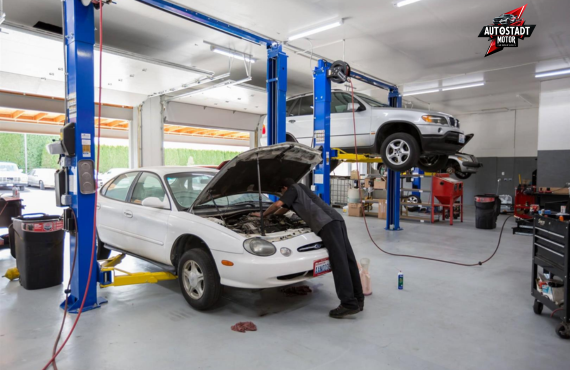
At AutoStadt Motor Services, the focus is on identifying the cause of a vehicle problem and recommending an appropriate repair. Whether your Mercury needs engine diagnostics, brake servicing, suspension repair, air-conditioning maintenance, or transmission inspection, a systematic approach helps you make informed decisions about your vehicle.
Signs Your Car Needs Mercury Repair
A Mercury may continue running even when a component is beginning to fail. However, recognising early warning signs can help prevent further damage and reduce the likelihood of an unexpected breakdown.
1. Engine Warning Lights or Reduced Performance
An illuminated check-engine light is one of the most common reasons to arrange a professional inspection. Depending on the fault, the vehicle may also experience rough idling, hesitation during acceleration, reduced fuel efficiency, or difficulty starting.
Potential causes include ignition problems, sensor faults, fuel-delivery issues, or emissions-system malfunctions. Older Mercury models may develop different problems depending on their engine configuration and mileage.
A diagnostic scan can help identify stored fault codes. However, the code itself does not always confirm which component needs replacement. Further testing may be necessary to determine the actual cause.
2. Transmission Problems While Changing Gears
If your Mercury hesitates when shifting, changes gears harshly, slips out of gear, or makes unusual transmission noises, arrange an inspection promptly.
Transmission symptoms can result from fluid-related problems, worn internal components, electronic control faults, or other mechanical issues. Continuing to drive with severe slipping or abnormal shifting can increase the risk of additional damage.
At AutoStadt Motor Services, the appropriate inspection should consider the vehicle’s transmission type, service history, and reported symptoms before a repair is recommended.
3. Engine Overheating
Engine overheating is a serious warning sign, particularly when driving in Dubai’s hot weather. A rising temperature gauge, coolant warning, steam, or coolant collecting beneath the vehicle may indicate a cooling-system problem.
Possible causes include a coolant leak, radiator restriction, faulty thermostat, water pump issue, damaged hose, or cooling-fan malfunction.
If the temperature rises into the danger zone, stop somewhere safe and switch off the engine. Never remove a radiator cap while the system is hot, as pressurised coolant can cause severe burns.
4. Unusual Brake Noises or Reduced Stopping Power
Brakes should respond consistently and predictably. Grinding, persistent squealing, vibration during braking, or a soft brake pedal may indicate a problem that requires attention.
Worn brake pads, damaged discs, hydraulic faults, and other braking-system issues can affect stopping performance.
Because braking problems directly affect safety, they should not be postponed in favour of routine maintenance. A proper inspection can establish whether the vehicle needs brake pad replacement, disc servicing, hydraulic repairs, or additional work.
5. Suspension Noise and Uneven Tyre Wear
Knocking sounds over speed bumps, excessive body movement, steering instability, or uneven tyre wear can point to suspension or steering problems.
Depending on the Mercury model, the cause may involve worn shock absorbers, damaged suspension bushes, ball joints, steering components, or wheel-alignment issues.
Dubai’s road conditions and repeated encounters with uneven surfaces can make suspension condition particularly important. Identifying worn components early can also help prevent premature tyre wear.
6. Weak Air Conditioning
An ageing Mercury may struggle to maintain comfortable cabin temperatures if its air-conditioning system is not working correctly.
Weak cooling, unusual compressor noises, unpleasant vent odours, and inconsistent airflow can result from refrigerant leaks, compressor problems, restricted filters, electrical faults, or condenser issues.
An AC gas refill is not always the correct solution. If refrigerant is escaping, the leak should be identified and addressed before the system is recharged.
7. Battery or Electrical Problems
Slow engine cranking, dim lights, intermittent electrical accessories, or repeated battery discharge can indicate an electrical-system issue.
Although an old battery may be responsible, the alternator, wiring, terminals, starter motor, or an electrical drain may also require investigation.
A battery and charging-system test can help distinguish between these possibilities and prevent unnecessary replacement of otherwise functional components.
Why Choose AutoStadt Motor Services for Mercury Repair
Selecting a suitable repair workshop matters, particularly when maintaining an older or discontinued vehicle. The objective should be to restore dependable operation without replacing components unnecessarily.
Thorough Vehicle Diagnostics
AutoStadt Motor Services focuses on investigating the symptoms before recommending a repair.
For engine concerns, this may involve diagnostic scanning and mechanical checks. For cooling problems, the inspection may include coolant levels, hoses, the radiator, and related components. Brake, suspension, electrical, and transmission issues require their own appropriate testing procedures.
This approach helps establish which repairs are necessary and which components may still be serviceable.
Repair Recommendations Based on Vehicle Condition
Two Mercury vehicles of the same model can have very different maintenance needs because of mileage, age, previous repairs, and driving history.
For example, one Grand Marquis might require routine brake maintenance, while another may need attention to its cooling system or suspension. A Milan with an electrical warning may require a different diagnostic procedure from a Mountaineer experiencing transmission trouble.
The repair plan should therefore reflect the actual condition of the individual vehicle.
Support for Essential Mechanical Systems
A reliable repair service considers the relationship between different vehicle systems. Engine performance, cooling, transmission operation, braking, suspension, and electrical reliability all contribute to the overall driving experience.
AutoStadt Motor Services can assess the reported concern and recommend the relevant repair or maintenance work based on inspection findings.
Careful Parts Selection for Older Mercury Models
Because Mercury production ended in 2011, parts availability can vary by model, year, engine, and component. Some parts may be shared with related Ford vehicles, while others require specific compatibility checks.
Before ordering a replacement component, its suitability should be confirmed using the vehicle’s exact details. This is particularly important for electronic modules, engine components, transmission parts, and model-specific equipment.
Service for Dubai Driving Conditions
High temperatures and heavy traffic can expose weaknesses in cooling systems, batteries, air conditioning, and other components.
Preventive maintenance can help identify these issues before they interrupt daily travel. Whether you also own a Toyota Camry, Nissan Altima, BMW 5 Series, or Mercedes-Benz E-Class, the correct maintenance procedure depends on the vehicle’s own design and service requirements.
How Our Mercury Repair Process Works
A structured repair process makes it easier to understand what is wrong, what needs attention, and how the completed work should be checked.
Step 1: Discuss the Symptoms
The process begins with information about the problem. Drivers should describe warning lights, unusual sounds, leaks, starting difficulties, overheating, or changes in vehicle performance.
It is also helpful to mention when the symptom occurs, such as during cold starts, acceleration, braking, or extended driving.
Step 2: Inspect the Vehicle
The technician inspects the relevant systems according to the complaint. This may involve checking visible leaks, fluid levels, hoses, belts, wiring, brake components, suspension parts, or other accessible areas.
The inspection helps narrow down the possible causes and determine whether additional diagnostic testing is required.
Step 3: Perform Appropriate Diagnostic Tests
Where necessary, diagnostic equipment and mechanical tests are used to investigate the fault.
For example, an engine warning may require scanning and further component testing, while overheating may call for cooling-system checks. A transmission complaint may require a separate assessment based on the installed transmission and its symptoms.
Testing helps avoid relying on assumptions alone.
Step 4: Explain the Required Repairs
Once the fault has been assessed, the necessary work should be explained clearly.
This may include the cause of the problem, the components requiring attention, suitable repair options, and any additional issues discovered during inspection.
For an older Mercury, parts availability and compatibility should be considered before finalising the repair plan.
Step 5: Complete the Repair
The agreed repair is then carried out using components and procedures appropriate for the vehicle.
Depending on the diagnosis, the work could involve replacing a damaged hose, servicing brakes, repairing an electrical fault, addressing an engine issue, or carrying out suspension maintenance.
The scope of work should remain connected to the identified problem and the vehicle’s condition.
Step 6: Verify the Results
After the repair, the relevant system should be checked again.
Depending on the job, this may include verifying engine operation, checking for leaks, assessing brake function, confirming cooling performance, or ensuring that the original warning or symptom has been resolved.
A final inspection helps establish whether the repair has addressed the customer’s concern.
Mercury Repair and Preventive Maintenance Tips
Because Mercury vehicles are no longer produced, preventive maintenance is particularly useful for owners who want to keep their cars dependable.
First, follow a suitable maintenance schedule for the specific model and engine. Engine oil, coolant, transmission fluid, brake fluid, filters, belts, and other service items should be inspected or replaced according to the manufacturer’s requirements and the vehicle’s condition.
Second, pay attention to fluid leaks. Engine oil, coolant, transmission fluid, and brake fluid serve different purposes, and their appearance alone may not always reveal the source. If a leak appears, arrange an inspection rather than repeatedly topping up the fluid without identifying the cause.
Third, keep the cooling system in good condition. Check for unexplained coolant loss, damaged hoses, or temperature fluctuations. Overheating can cause significant engine damage, so early intervention is important.
Fourth, monitor the battery and charging system, especially if the vehicle is used infrequently. Older vehicles can develop electrical issues that are not resolved simply by installing a new battery.
Finally, keep accurate service records. Information about previous repairs, component replacements, and maintenance dates can help a technician understand the vehicle’s history and make more informed recommendations.
Frequently Asked Questions About Mercury Repair in Dubai
1. Can I still get Mercury Repair in Dubai even though the brand has been discontinued?
Yes, repair and maintenance may still be possible for many Mercury models. However, parts availability depends on the vehicle’s year, engine, model, and the component required. Some parts may be available through existing aftermarket or specialist suppliers, while others may need to be sourced separately. AutoStadt Motor Services can assess the vehicle and help determine the appropriate repair requirements.
2. What are the most common problems found in older Mercury vehicles?
The problems vary by model and maintenance history. Owners may encounter cooling-system leaks, ageing electrical components, suspension wear, brake deterioration, engine-performance issues, or transmission concerns. However, these are possibilities rather than faults that affect every Mercury. A proper inspection is necessary to identify the actual problem and avoid replacing components unnecessarily.
3. Can Ford parts be used for Mercury repairs?
Some Mercury models share platforms, engines, or components with certain Ford vehicles, which can help with parts availability. Nevertheless, compatibility should never be assumed based on the brand alone. Part numbers, model year, engine specification, transmission type, and equipment must be checked before installation. Using an incompatible part may create performance or reliability problems.
4. How much does Mercury Repair cost in Dubai?
The cost depends on the type of fault, the model, labour requirements, and the availability of suitable replacement parts. Routine servicing and minor repairs generally involve different costs from major engine, transmission, or electronic-system work. An initial inspection can help establish the scope of the repair before a more accurate estimate is prepared.
5. How can I keep my Mercury reliable in Dubai’s climate?
Regular maintenance is the best starting point. Pay attention to the cooling system, engine oil, battery, air conditioning, brakes, tyres, and suspension. Investigate warning lights, unusual noises, overheating, or fluid leaks promptly. If the vehicle is driven infrequently, periodic checks are also useful. A maintenance plan based on the exact Mercury model and its current condition can help reduce unexpected problems.
Conclusion
Mercury Repair requires a practical, vehicle-specific approach, particularly because these discontinued vehicles can differ significantly in age, condition, parts availability, and maintenance history. Whether your Mercury needs engine diagnostics, transmission inspection, brake repairs, suspension work, AC maintenance, or electrical troubleshooting, identifying the underlying fault is the first step toward a dependable solution.
For Dubai owners, preventive maintenance is especially valuable because heat, traffic, and regular air-conditioning use place additional demands on important vehicle systems. Addressing warning signs early can help reduce the likelihood of more extensive damage and keep an older vehicle performing as reliably as possible.
AutoStadt Motor Services can help assess Mercury repair requirements and recommend suitable maintenance or repair work based on the vehicle’s condition. If your Mercury is showing warning lights, losing fluids, overheating, making unusual noises, or experiencing changes in performance, arrange an inspection to establish the cause and determine the next steps.
With accurate diagnosis, compatible parts, and consistent maintenance, many older vehicles can continue to provide useful service for years to come.


Leave a Comment