
Mini Cooper ac condenser change can become necessary when your car’s air conditioning system no longer produces the strong, consistent cooling expected from a Mini Cooper. The condenser is an important part of the automotive AC system because it helps release heat from the refrigerant before the refrigerant continues through the rest of the cooling cycle. When the condenser is damaged, blocked, corroded, or leaking, the AC may struggle to cool the cabin properly.
For Dubai drivers, an effective air conditioning system is more than a comfort feature. High outdoor temperatures mean that drivers depend heavily on the AC during daily commuting, traffic, parking, and long journeys. A small refrigerant leak or damaged condenser can therefore become noticeable very quickly.
At AutoStadt Motor Services, Mini Cooper owners can receive professional AC diagnosis and condenser replacement based on the actual condition of the vehicle. Instead of replacing parts without proper testing, our technicians inspect the AC system, identify the source of the problem, and determine whether a condenser replacement is genuinely required.
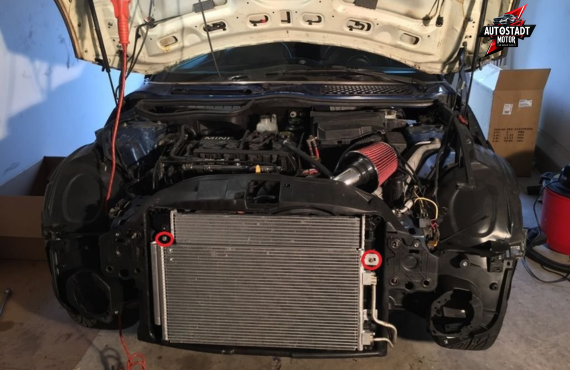
Whether you drive a Mini Cooper Hatch, Countryman, Clubman, or another variant, the correct diagnosis is the starting point for restoring reliable cabin cooling.
Signs Your Car Needs Mini Cooper AC Condenser Change
A failing condenser does not always produce one obvious symptom. In many cases, several smaller warning signs appear together. Recognizing them early can help prevent additional AC problems and unnecessary repair costs.
Weak or Inconsistent Cabin Cooling
One of the most common complaints is that the AC is running but the air coming from the vents is not cold enough. You may initially notice this only after the vehicle has been sitting outside. However, if the system continues to provide weak cooling even after several minutes of driving, further inspection is advisable.
A damaged condenser may prevent the refrigerant from transferring heat efficiently. As a result, the entire air conditioning system can struggle to maintain the desired temperature.
Refrigerant Leaks Around the Condenser
The condenser is positioned at the front of the vehicle, where it is exposed to road debris, moisture, dirt, and other environmental factors. Over time, physical damage or corrosion can create a leak.
If refrigerant escapes through a damaged condenser, AC performance gradually decreases. In some cases, technicians may identify oily residue around the affected area because automotive refrigerant carries compressor oil through the system.
A refrigerant leak should not simply be treated with repeated gas refills. If the underlying condenser is leaking, replacing the damaged component is often necessary.
AC Takes Too Long to Cool
Your Mini Cooper may still produce cool air, but the cabin takes unusually long to become comfortable. This can indicate that the AC system is not operating at its intended efficiency.
Although slow cooling can have several causes, including low refrigerant, a weak compressor, restricted airflow, or evaporator problems, the condenser should be checked during diagnosis.
Unusual AC Pressure Readings
Modern AC systems operate within specific pressure ranges. During a professional inspection, technicians can connect appropriate diagnostic equipment to evaluate system pressures.
Abnormal high- or low-pressure readings do not automatically prove that the condenser has failed. Instead, they provide useful information that helps technicians investigate the system further.
This diagnostic approach is important because replacing a condenser without identifying the actual cause can leave the original problem unresolved.
Visible Damage to the Front Condenser
Because the condenser is located toward the front of the vehicle, it can be affected by stones, debris, minor impacts, and accumulated dirt. Bent fins may restrict airflow, while significant physical damage can compromise the condenser itself.
A visual inspection can reveal damaged fins, corrosion, contamination, or signs of refrigerant leakage. However, even when the condenser looks acceptable externally, pressure or leak testing may still be necessary.
AC Performance Changes in Heavy Traffic
Some AC systems appear to work reasonably well while the vehicle is moving but become noticeably weaker when the car is stationary. This can sometimes point toward airflow or condenser-related problems.
The condenser depends on airflow to release heat. Therefore, technicians may also inspect the cooling fans and related components rather than assuming the condenser itself is the only problem.
Why Choose AutoStadt Motor Services for Mini Cooper AC Condenser Change
Choosing the right workshop matters because the AC system contains multiple connected components. A condenser problem can sometimes be confused with compressor, evaporator, expansion valve, fan, refrigerant, or electrical issues.
At AutoStadt Motor Services, our approach begins with diagnosis rather than immediate parts replacement.
Mini Cooper-Focused AC Inspection
Mini vehicles have compact engine bays and sophisticated electrical and mechanical systems. Proper inspection requires attention to the specific model and system configuration.
Our technicians assess the AC symptoms, inspect accessible components, check system pressures where appropriate, and look for evidence of leaks or physical damage.
Diagnosis Before Replacement
A weak AC does not automatically mean that the condenser needs to be changed. For example, a Toyota with poor cooling could have an airflow or refrigerant issue, while a BMW might require a different diagnostic path depending on its AC configuration.
The same principle applies to Mini Cooper vehicles: the correct repair should be based on evidence.
Professional Condenser Replacement
When inspection confirms that the condenser is damaged or leaking, the component can be replaced using suitable procedures. Connections and surrounding components should also be checked so that the new condenser is not installed into a system with another unresolved fault.
Leak and System Checks
After condenser replacement, the AC system should be checked for leaks and evaluated for proper operation. This is particularly important because introducing refrigerant into a system with an unresolved leak will not provide a lasting solution.
Customer-Focused Recommendations
At AutoStadt Motor Services, the objective is not simply to replace a part. We aim to explain what has gone wrong, what repair is required, and what additional checks may be useful.
This helps Mini Cooper owners make informed decisions about their vehicle instead of paying for unnecessary repairs.
How Our Mini Cooper AC Condenser Change Process Works
A professional condenser replacement should be handled as part of a complete AC service rather than as an isolated parts-swapping job.
Initial AC Assessment
The process starts with a discussion about the symptoms. We want to understand whether the AC became weak suddenly or gradually, whether cooling changes between driving and idling, and whether any unusual noises or warning signs have appeared.
This information gives the technician useful background before physical inspection begins.
AC System Inspection
The next step involves examining relevant AC components. Depending on the vehicle, this can include the condenser, compressor, hoses, fittings, cooling fans, electrical connections, and other parts involved in refrigerant circulation.
The condition of the condenser is assessed for leaks, impact damage, corrosion, blocked fins, or other problems.
Refrigerant and Pressure Diagnosis
Appropriate equipment can be used to assess the refrigerant circuit. Pressure readings can help identify abnormal operating conditions, while leak-detection procedures can help locate refrigerant loss.
Importantly, low refrigerant does not necessarily mean that the system simply needs another refill. If there is a leak, finding and repairing the source is essential.
Condenser Removal
If the condenser is confirmed to be defective, the old component is removed using the appropriate procedure for the particular Mini Cooper model.
Care is taken around AC lines and related components because the system operates as a sealed refrigerant circuit.
Installation of the Replacement Condenser
The replacement condenser is installed and connected correctly. Associated seals, fittings, and accessible components are checked as necessary during the repair.
This stage is especially important because an incorrectly sealed connection can create another refrigerant leak.
Vacuum and Leak Testing
After the component has been replaced, the system can undergo the required evacuation and leak-checking procedure. This helps remove unwanted moisture and air from the refrigerant circuit and confirms that the repaired system is properly sealed.
AC Performance Test
Finally, the AC is operated and evaluated. Cooling performance, system pressures, fan operation, and other relevant factors can be checked to ensure the repair has addressed the original complaint.
The goal is dependable cooling rather than simply getting cold air from the vents for a short period.
Maintaining Your Mini Cooper AC System in Dubai
A condenser replacement can restore the system, but sensible maintenance can help protect the AC afterward.
Keep the Condenser Area Clean
The front of the vehicle receives a considerable amount of dust and road debris. Excessive contamination can restrict airflow through the condenser.
During regular servicing, the front AC and cooling components should be inspected for dirt buildup or physical damage.
Do Not Ignore Small Cooling Changes
If your Mini Cooper gradually becomes less effective at cooling, arrange an inspection instead of waiting until the AC stops working completely.
Early diagnosis may reveal a minor issue before it contributes to larger component problems.
Check the Cooling Fans
Condenser airflow is important for proper AC operation. If a cooling fan is not functioning correctly, system temperatures and pressures can be affected.
Therefore, a complete AC diagnosis should consider the fan system as well as the condenser.
Avoid Repeated Unnecessary Gas Refills
Repeatedly adding refrigerant without locating a leak is not a proper long-term repair strategy. If refrigerant is escaping, the source should be identified and addressed.
This is particularly relevant when a damaged condenser is responsible for the leak.
Mini Cooper AC Condenser Problems vs Other AC Faults
It is useful to understand that several AC components can produce similar symptoms.
A faulty AC compressor may cause poor cooling or unusual noises. A damaged AC condenser can result in refrigerant leakage and inefficient heat rejection. An evaporator problem may affect cabin cooling and can sometimes be difficult to diagnose because the component is located inside the vehicle.
Likewise, a blocked expansion valve, defective pressure sensor, electrical fault, or cooling fan problem may create symptoms that resemble a refrigerant or condenser issue.
For comparison, AC diagnosis on a Mercedes-Benz, Nissan, or Tesla can involve different system designs and components. That is why experienced technicians should evaluate the specific Mini Cooper rather than applying the same repair assumption to every vehicle.
Frequently Asked Questions About Mini Cooper AC Condenser Change in Dubai
1. What does the AC condenser do in a Mini Cooper?
The AC condenser is part of the refrigerant circuit and helps release heat from the refrigerant after it leaves the compressor. This allows the refrigerant to continue through the cooling cycle and ultimately contribute to producing cool air inside the cabin.
If the condenser is damaged, restricted, or leaking, the AC may not operate efficiently. However, poor cooling can also come from other components, so proper diagnosis is important before replacement.
2. How do I know if my Mini Cooper condenser is leaking?
Common signs can include weak AC cooling, gradual loss of cooling performance, visible oily residue around AC connections or the condenser area, and abnormal refrigerant pressure readings.
A leak is not always visible to the driver. Professional leak-detection and system testing may therefore be required to confirm the source of refrigerant loss.
3. Can I just refill the AC gas instead of changing the condenser?
If the condenser is leaking, a gas refill is generally only a temporary measure because the refrigerant can escape again. The correct solution is to identify the leak and repair or replace the faulty component.
If the condenser itself is confirmed to be damaged, Mini Cooper ac condenser change may be required to restore the integrity of the refrigerant system.
4. How long does a Mini Cooper AC condenser replacement take?
The time required depends on the Mini Cooper model, condenser accessibility, condition of the AC connections, and whether additional faults are discovered during inspection.
A straightforward replacement may be completed within a service visit, while vehicles with additional leaks, damaged fittings, fan problems, or other AC faults can require more diagnostic and repair time. A workshop can provide a more accurate estimate after inspecting the vehicle.
5. Why should Mini Cooper AC problems be inspected quickly in Dubai?
Dubai’s high temperatures place significant demand on vehicle air conditioning. When cooling performance starts declining, the problem can become much more noticeable during daily driving.
Prompt inspection can help identify refrigerant leaks, condenser damage, fan problems, or other faults before the AC system becomes completely ineffective. It also helps avoid repeatedly spending money on temporary fixes when a component requires proper repair.
Conclusion
Mini Cooper ac condenser change is an important repair when a damaged, leaking, or severely restricted condenser is preventing the AC system from operating correctly. Because several AC components can produce similar symptoms, accurate diagnosis should come before replacing any major part.
For Mini Cooper owners in Dubai, AutoStadt Motor Services provides professional AC inspection, condenser replacement, leak testing, and related air conditioning services with a focus on identifying the actual cause of the problem.
If your Mini Cooper is taking too long to cool, losing refrigerant, producing weak AC, or showing signs of condenser damage, arranging an inspection can help determine the appropriate repair. A correctly diagnosed and professionally repaired AC system can provide the consistent cabin cooling needed for comfortable driving throughout Dubai.


Leave a Comment