
Subaru Steering Oil Leak Repair is an important service for Dubai drivers who notice fluid underneath their vehicle, heavy steering, unusual noises, or a gradual loss of steering assistance. A power steering leak may begin as a minor issue, but delaying the repair can allow the fluid level to drop and place additional stress on the steering pump and other components.
Subaru vehicles are known for their practical engineering, all-wheel-drive capability, and dependable performance. However, like any vehicle, a Subaru can develop fluid leaks as seals, hoses, pipes, pumps, and connections age. Dubai’s hot climate can also put additional thermal stress on rubber components and fluids, making regular inspection particularly important.
At AutoStadt Motor Services, Subaru owners can get professional inspection and repair for steering fluid leaks. The objective is not simply to clean the visible oil and replace a part. A proper repair starts by identifying exactly where the fluid is escaping, checking the condition of connected components, and then correcting the underlying problem.
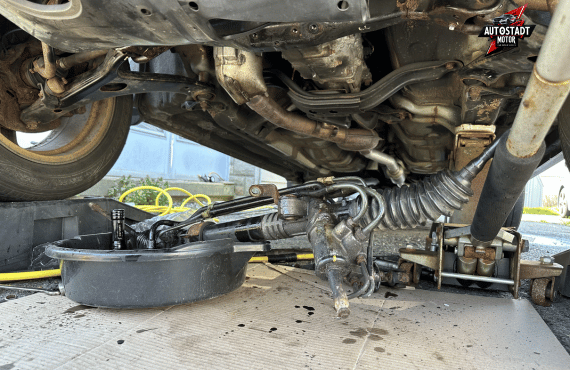
Whether you drive a Subaru Forester, Outback, Impreza, Legacy, or another Subaru model, early diagnosis can help prevent a relatively straightforward leak from developing into a more expensive steering system problem.
Signs Your Car Needs Subaru Steering Oil Leak Repair
A steering fluid leak does not always appear as a large puddle immediately. In many cases, the first symptoms are subtle. Recognizing them early can help you arrange Subaru steering oil leak repair before the system suffers additional damage.
1. Fluid Under the Vehicle
One of the clearest warning signs is fluid collecting underneath the front section of your Subaru. Power steering fluid may appear reddish, amber, brown, or darker depending on its age and condition.
However, several automotive fluids can leak from the front of a vehicle. Engine oil, transmission fluid, coolant, and steering fluid can sometimes be confused with one another. Therefore, identifying the source correctly is essential.
AutoStadt Motor Services can inspect the affected area and trace the leak to its source rather than relying only on the location of the fluid on the ground.
2. Low Power Steering Fluid
If the steering fluid reservoir repeatedly becomes low, there is a strong possibility that the system has a leak or another fluid-related problem.
Simply topping up the reservoir may temporarily restore the fluid level, but it does not fix the cause. If the fluid continues to disappear, the steering system should be inspected.
Driving for an extended period with insufficient fluid can increase friction and heat inside components designed to operate with proper lubrication.
3. Heavy or Difficult Steering
A noticeable increase in steering effort is another warning sign. You may find that turning the steering wheel at low speeds requires more force than usual.
For example, parking or making tight turns may suddenly feel harder. This can happen when the power steering system is not receiving sufficient fluid pressure.
Because steering is directly connected to vehicle control, changes in steering feel should never be ignored.
4. Whining or Groaning Sounds
A whining noise when turning the steering wheel can indicate that the power steering pump is struggling because of low fluid or air entering the system.
The noise may become more noticeable during parking maneuvers or when the steering wheel is turned significantly. Although noise alone does not confirm a leak, it is an important symptom that warrants inspection.
5. Visible Wetness Around Steering Components
Fluid may accumulate around hoses, seals, fittings, the steering pump, or steering rack. In some cases, the leak may be slow enough that there is no obvious puddle, but a technician can identify damp or contaminated areas during inspection.
A professional diagnosis is especially useful when the source is difficult to see from above the engine bay.
6. Burning or Fluid Odor
Leaking fluid can sometimes reach hot engine components, producing an unusual smell. If you notice an unfamiliar fluid odor together with steering problems, arrange an inspection rather than continuing to drive normally.
Why Choose AutoStadt Motor Services for Subaru Steering Oil Leak Repair
Choosing the right workshop matters because a steering leak can originate from several different components. Replacing a part without confirming the source can lead to unnecessary expense while leaving the actual leak unresolved.
Accurate Leak Diagnosis
At AutoStadt Motor Services, the repair process begins with an inspection designed to locate the source of the fluid loss. The technician checks the steering system, hoses, connections, seals, reservoir, pump, and related components.
This diagnostic approach helps distinguish between a leaking hose and a problem involving a steering pump or rack.
Subaru-Focused Service
Subaru vehicles can have model-specific mechanical characteristics, so technicians need to understand the vehicle rather than treating every steering system in exactly the same way.
A Subaru Forester, for example, may require a different inspection approach from a BMW 3 Series or Mercedes-Benz C-Class. AutoStadt Motor Services focuses on identifying the actual condition of the vehicle before recommending repairs.
Quality Replacement Components
When a component must be replaced, using an appropriate replacement part is important for reliability. The objective is to restore the steering system to dependable operating condition rather than providing a temporary solution.
Depending on the vehicle and repair requirements, the service may involve replacing a damaged hose, seal, connection, pump, or another steering-related component.
Transparent Repair Recommendations
A good workshop should explain what is wrong, why it needs attention, and what repair is appropriate. AutoStadt Motor Services aims to provide Subaru owners with clear information before repair work is carried out.
This makes it easier for Dubai car owners to understand whether they are dealing with a minor hose leak or a more significant steering system issue.
Convenient Service for Dubai Drivers
Dubai drivers often depend heavily on their vehicles for commuting, family transportation, business travel, and daily errands. A steering problem can become particularly inconvenient when it develops unexpectedly.
Addressing the issue early can reduce the possibility of an inconvenient breakdown and help keep your vehicle dependable.
How Our Subaru Steering Oil Leak Repair Process Works
A professional Subaru steering oil leak repair should follow a logical process rather than simply replacing the first component that appears wet.
Step 1: Initial Inspection
The technician begins by discussing the symptoms with you. Information such as when the leak was noticed, whether steering became heavier, and whether unusual noises developed can help narrow down the problem.
The vehicle is then inspected for visible signs of fluid leakage.
Step 2: Identify the Fluid
Before repairing anything, the technician needs to determine what type of fluid is leaking. This is important because the front section of a vehicle contains several systems that use different fluids.
Correct identification prevents the wrong repair approach.
Step 3: Trace the Leak
The steering system is inspected around common leak points, including hoses, fittings, seals, the pump, reservoir, and steering rack.
The visible fluid location does not necessarily represent the original source because fluid can travel across surrounding components before reaching the ground.
Step 4: Inspect Related Components
Once the leak is located, connected components are checked for secondary damage or excessive wear.
For instance, if a steering hose has failed, the technician may also inspect nearby fittings and the pump to determine whether the vehicle has been operated with low fluid for an extended period.
Step 5: Repair or Replace the Faulty Component
Depending on the diagnosis, Subaru steering oil leak repair may involve replacing a damaged hose, sealing connection, gasket, seal, pump, or another component.
The correct repair depends on the source and severity of the leak rather than simply the amount of fluid visible underneath the vehicle.
Step 6: Refill and Check the System
After the repair, the steering system is supplied with the appropriate fluid according to the vehicle’s requirements. The technician then checks the system for proper operation and signs of continued leakage.
Step 7: Steering Performance Check
Finally, steering operation is assessed to make sure the vehicle responds normally. Unusual noises, excessive steering effort, and remaining leaks should be investigated before the vehicle is considered ready for regular use.
This final check is especially important because the goal is not merely to stop the visible leak but to restore dependable steering performance.
Frequently Asked Questions About Subaru Steering Oil Leak Repair in Dubai
1. What causes a Subaru steering oil leak?
A Subaru steering oil leak can develop because of aging hoses, damaged seals, loose connections, worn components, or deterioration around the steering pump or rack. Over time, rubber and sealing materials can lose their ability to contain fluid effectively.
Dubai’s high temperatures can also increase the operating stress experienced by various vehicle components. However, climate alone does not necessarily mean a leak will occur. The exact cause should be confirmed through inspection.
2. Can I drive my Subaru with a steering fluid leak?
It is not advisable to continue driving for a long period when you know the steering system is losing fluid. A minor leak can become worse, while low fluid levels may cause increased steering effort and potentially damage the power steering pump.
If steering becomes unusually heavy, noisy, or unpredictable, arrange professional assistance rather than continuing to drive unnecessarily.
3. How much does Subaru steering oil leak repair cost in Dubai?
The cost depends on the source of the leak and the component that requires attention. A leaking hose or connection can generally require a different level of repair from a leaking steering pump or rack.
Therefore, giving a fixed price without inspecting the vehicle can be misleading. AutoStadt Motor Services can assess the vehicle and determine what repair is actually required.
4. Is a steering oil leak the same on every car?
No. Different vehicles use different steering system designs and components. A Subaru should be diagnosed according to its specific model and system configuration.
For comparison, a Toyota Camry, Nissan Patrol, BMW 5 Series, and Tesla may have substantially different steering technologies and maintenance requirements. This is why a technician should identify the vehicle’s exact system before recommending a repair.
Modern vehicles can also use electric power steering rather than traditional hydraulic systems, so not every vehicle will even have conventional steering fluid.
5. How can I prevent Subaru steering oil leaks?
Regular vehicle inspections are one of the best ways to identify deteriorating hoses, seals, and connections before they develop into significant leaks. Check for unexplained fluid spots, changes in steering feel, unusual noises, or repeated drops in the fluid level.
Following the manufacturer’s maintenance recommendations is also important. In addition, having your Subaru inspected when you first notice a potential problem can reduce the chance of a small issue becoming a larger repair.
Conclusion
Subaru Steering Oil Leak Repair should not be postponed when you notice fluid loss, heavy steering, unusual noises, or visible leakage. Although a small leak may initially seem harmless, continued fluid loss can affect steering performance and potentially damage expensive components.
For Dubai Subaru owners, early diagnosis is a practical way to protect both vehicle reliability and driving safety. AutoStadt Motor Services provides professional inspection and repair to identify the source of steering fluid leaks and recommend the appropriate solution.
Whether your Subaru needs a hose replacement, seal repair, steering pump service, or further system inspection, the key is to address the underlying cause rather than repeatedly topping up the fluid.
If you notice a new fluid spot under your Subaru or the steering no longer feels normal, having the vehicle inspected promptly can help prevent a minor leak from turning into a much larger steering repair. With proper diagnosis, suitable replacement components, and careful post-repair checks, you can get back on Dubai roads with greater confidence and dependable steering performance.


Leave a Comment