
MG coolant system repair is essential when your vehicle starts losing coolant, running hotter than normal, showing an overheating warning, or developing problems with its radiator, thermostat, water pump, cooling fan, or related components. The cooling system plays a critical role in controlling engine temperature, and even a small fault can become a serious mechanical problem if it is ignored.
Modern MG vehicles rely on a carefully regulated cooling system to keep the engine operating within its intended temperature range. Coolant circulates through the engine and radiator, carrying excess heat away from the engine before the fluid is cooled and circulated again. When this process is interrupted by a leak, restricted flow, failed component, or electrical fault, engine temperature can rise quickly.
For Dubai drivers, cooling-system condition deserves particular attention. Traffic congestion, frequent idling, high ambient temperatures, and demanding daily driving can expose weaknesses in a vehicle’s cooling system. However, overheating should never automatically be blamed on the weather. A healthy cooling system should be able to manage normal operating conditions. When the temperature becomes abnormal, the underlying fault needs to be identified.
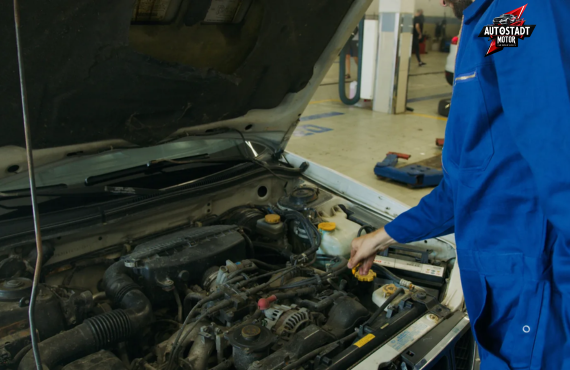
At AutoStadt Motor Services, MG coolant system repair focuses on finding the reason behind the cooling problem rather than simply adding coolant. Whether the issue involves a radiator leak, thermostat, water pump, cooling fan, expansion tank, hose, radiator cap, or another component, proper diagnosis helps determine the most appropriate repair.
Signs Your Car Needs MG Coolant System Repair
Cooling-system problems can develop gradually or appear suddenly. Recognizing the early symptoms gives you an opportunity to arrange an inspection before a minor issue becomes an expensive engine repair.
1. Engine Temperature Is Higher Than Normal
A temperature gauge that consistently rises above its normal operating position should never be ignored.
If your MG begins running hotter than usual, there may be a problem with coolant circulation, heat transfer, airflow, or temperature regulation. The cause could range from a low coolant level to a thermostat or radiator problem.
A temporary temperature increase can sometimes be caused by unusual driving conditions, but repeated overheating indicates that the cooling system needs attention.
2. Coolant Level Keeps Dropping
Coolant does not normally disappear from a properly functioning closed cooling system.
If you regularly need to add coolant to your MG, there may be a leak somewhere in the system. The source could be an upper or lower radiator hose, expansion tank, radiator, water pump area, thermostat housing, or another connection.
A leak may not always create a large puddle. Some leaks are small enough to leave only dried coolant residue or become noticeable when the engine reaches operating temperature.
3. Coolant Warning Appears on the Dashboard
A coolant-related warning light or temperature warning deserves immediate attention.
Depending on the specific MG model, the vehicle may provide different warnings related to engine temperature or coolant conditions. These warnings should not be dismissed simply because the car continues to drive normally.
Electronic warnings can sometimes appear before the driver notices a significant change in engine temperature, giving you an opportunity to investigate the problem earlier.
4. Sweet Smell Around the Engine Bay
Coolant can have a distinctive sweet smell.
If you notice this smell after driving, especially around the front of the vehicle or engine compartment, it may indicate that coolant is escaping from the system.
You may also notice steam or a small amount of visible vapour if coolant reaches a hot engine component. In that situation, the vehicle should be allowed to cool before anyone attempts to inspect or open the cooling system.
5. Visible Coolant Under the Vehicle
A puddle underneath your MG can be another indication of a cooling-system leak.
The location and appearance of the fluid can provide useful clues, but it is not always possible to determine the exact source simply by looking underneath the vehicle. Coolant can travel along components before reaching the ground.
That is why a proper inspection is more reliable than assuming that the component directly above the puddle is automatically responsible.
6. Cooling Fan Runs Abnormally
The radiator cooling fan helps maintain appropriate engine temperature, particularly when the vehicle is stationary or moving slowly.
If the fan runs excessively, does not activate when expected, or operates with unusual behaviour, there may be an issue involving the fan motor, relay, wiring, sensor, control system, or another cooling component.
In Dubai traffic, where vehicles may spend extended periods moving slowly or idling, a properly functioning cooling fan is particularly important.
7. Cabin Heater Performance Changes
Changes in cabin heating can sometimes provide clues about coolant circulation.
If the vehicle’s heater suddenly produces inconsistent heat while the engine temperature is also behaving abnormally, the cooling system may not be circulating coolant correctly.
This symptom should be evaluated together with other signs rather than used as a standalone diagnosis.
Why Choose AutoStadt Motor Services for MG Coolant System Repair
A cooling-system repair requires more than identifying that the engine is overheating. The important step is finding the reason why the system is no longer controlling temperature properly.
Diagnostic Inspection Before Parts Replacement
At AutoStadt Motor Services, the repair process starts with an assessment of the vehicle and its symptoms.
The technician can inspect the coolant level, visible components, hoses, radiator area, expansion tank, thermostat-related components, water pump area, cooling fan operation, and other relevant parts depending on the MG model.
This helps reduce the risk of replacing components unnecessarily.
Understanding Different Cooling-System Faults
Not every overheating problem is caused by the same component.
For example, a low coolant level may result from a leak, while a normal coolant level with rising temperature may point toward a circulation, airflow, thermostat, fan, or other issue.
This distinction is important because adding coolant alone will not solve a failed water pump or malfunctioning cooling fan.
Model-Specific Approach
MG offers multiple models with different engine configurations and cooling-system layouts. Therefore, repair requirements can vary according to the vehicle.
A technician should consider the specific MG model, engine configuration, symptoms, and condition of the cooling system before recommending a repair.
The same principle applies across different brands. A cooling problem in a Toyota may have a different diagnostic path from one in a BMW, Nissan, Mercedes-Benz, or Tesla because their systems and components can differ significantly.
Focus on Preventing Repeat Problems
A temporary solution may restore coolant levels without addressing the actual cause.
AutoStadt Motor Services focuses on identifying the underlying fault so that the repair addresses the reason behind the overheating, coolant loss, or abnormal temperature.
That approach can be particularly useful when a vehicle has already experienced repeated coolant loss or previous cooling-system repairs.
Convenient Support for Dubai Drivers
For Dubai car owners, an overheating vehicle can become a major inconvenience, especially during daily commuting or long-distance travel between different areas of the city.
Getting the vehicle inspected when the first warning signs appear can help prevent an unexpected breakdown and potentially reduce the scale of the repair.
How Our MG Coolant System Repair Process Works
A structured diagnostic process makes it easier to distinguish between a coolant leak, circulation problem, airflow issue, and temperature-control fault.
Step 1: Discuss the Symptoms
The first stage is understanding what the driver has experienced.
The technician may consider when the temperature rises, whether coolant has been added recently, whether the cooling fan is running, whether warning lights have appeared, and whether the vehicle has previously overheated.
These details can provide useful direction for the inspection.
Step 2: Inspect the Cooling System
The cooling system is then examined for visible signs of damage or leakage.
Depending on the MG model, inspection may include the radiator, coolant hoses, expansion reservoir, thermostat housing, water pump area, radiator cap, cooling fan, and other accessible components.
Dried coolant marks can also provide useful evidence of a previous or ongoing leak.
Step 3: Check for Coolant Leaks
If coolant loss is suspected, the system may require further leak testing.
A cooling-system pressure test can help reveal leaks that are difficult to identify during a simple visual inspection. The objective is to establish where coolant is escaping rather than repeatedly topping up the reservoir.
Step 4: Evaluate Coolant Circulation
If there is no obvious external leak, the next question is whether coolant is circulating correctly.
Problems involving the thermostat, water pump, restricted radiator passages, air trapped in the cooling system, or other components can affect circulation.
The vehicle’s specific symptoms and diagnostic information help determine which areas require further attention.
Step 5: Test Cooling Fan Operation
The radiator fan is an important part of temperature management.
The technician can evaluate whether the fan activates correctly and whether related electrical components are functioning as expected.
A cooling fan fault can become especially noticeable when a vehicle is stationary because there is less natural airflow through the radiator.
Step 6: Repair the Confirmed Fault
Once the cause has been identified, the required repair can be carried out.
Depending on the diagnosis, this could involve replacing a damaged hose, radiator component, thermostat, water pump, expansion tank, fan-related component, or another cooling-system part.
The objective is to repair the actual fault rather than simply treating the symptom.
Step 7: Refill and Recheck the System
After the repair, the appropriate coolant should be used according to the vehicle’s requirements.
The system should then be checked for leaks and proper operation. Where necessary, air should be removed from the cooling system using the appropriate procedure.
The vehicle can then be monitored to confirm that the temperature remains within the expected operating range.
Protecting Your MG Cooling System in Dubai
Preventive maintenance can make a significant difference to cooling-system reliability.
First, do not ignore gradual coolant loss. A small leak can eventually become much larger, particularly when a hose, seal, or plastic component continues to deteriorate.
Second, pay attention to temperature changes. If your MG normally operates at a stable temperature but begins running hotter during traffic, investigate the change instead of assuming it is normal for Dubai.
Third, maintain the cooling system according to the vehicle manufacturer’s requirements. Using the correct coolant specification is important because different cooling systems can require different formulations.
It is also worth checking the condition of related components during routine maintenance. A cooling-system inspection may identify ageing hoses, damaged connections, radiator deterioration, or other issues before they cause an overheating event.
Finally, if the temperature warning indicates serious overheating, continuing to drive can be risky. Severe overheating can cause expensive engine damage, so allowing the vehicle to cool and arranging professional assistance is generally safer than attempting to complete a journey with an overheating engine.
Frequently Asked Questions About MG Coolant System Repair in Dubai
1. Why does my MG keep losing coolant?
Repeated coolant loss usually indicates that coolant is escaping somewhere or, in some situations, that there is another underlying cooling-system or engine problem. Possible sources include hoses, radiator connections, the expansion tank, thermostat housing, water pump area, or radiator. Because some leaks are difficult to see, professional pressure testing may be necessary. Simply adding coolant repeatedly does not resolve the source of the problem.
2. Can I drive my MG if the temperature is higher than normal?
It is not advisable to continue driving an overheating vehicle simply because it is still moving normally. Excessive engine temperature can lead to serious mechanical damage. If the temperature warning becomes severe, steam appears, coolant is leaking heavily, or the vehicle enters an overheating condition, stop safely and allow the engine to cool. The underlying cause should then be diagnosed before normal driving resumes.
3. What causes MG overheating in Dubai?
Overheating can have many causes, and Dubai’s high ambient temperatures can increase the demands placed on the cooling system, particularly during traffic and prolonged idling. However, the heat itself should not be assumed to be the root cause. A weak cooling fan, low coolant, radiator restriction, thermostat fault, water pump problem, leak, or another mechanical or electrical issue may be responsible. Proper diagnosis is needed to identify the actual fault.
4. How much does MG coolant system repair cost in Dubai?
There is no single price because cooling-system repairs vary considerably. Replacing a hose or resolving a minor leak is generally a different job from replacing a radiator, water pump, thermostat, or other major component. The MG model, engine configuration, parts required, and extent of damage can all influence the final cost. AutoStadt Motor Services can inspect the vehicle first and determine which repair is actually required.
5. How can I prevent cooling-system problems in my MG?
Regular maintenance is the best starting point. Monitor coolant levels, pay attention to temperature changes, investigate warning lights, and do not ignore visible leaks or unusual smells. The cooling system should also be inspected during appropriate maintenance intervals, particularly if the vehicle has high mileage or has previously experienced overheating. Using the correct coolant and maintaining hoses, radiator components, thermostat, water pump, and cooling fan in good condition can help maintain reliable temperature control.
Conclusion
MG coolant system repair is an important service when your vehicle develops coolant loss, overheating, temperature fluctuations, warning lights, or other cooling-related symptoms. Because the cooling system contains several interconnected components, the same symptom can have completely different causes.
A leaking hose, weak radiator, faulty thermostat, damaged expansion tank, water pump problem, cooling fan fault, or restricted coolant flow can all affect engine temperature. Therefore, accurate diagnosis should come before replacing parts or repeatedly adding coolant.
For Dubai drivers, maintaining a healthy cooling system is especially important because heavy traffic, frequent idling, and high ambient temperatures can place additional demands on the vehicle. However, an overheating MG should always be investigated as a mechanical issue rather than simply being considered a consequence of the climate.
AutoStadt Motor Services provides professional MG coolant system inspection and repair for Dubai car owners, helping identify the actual cause of cooling problems and recommend the appropriate repair. If your MG is losing coolant, running hotter than usual, or displaying a temperature warning, arranging an inspection early can help protect the engine and keep your vehicle dependable on Dubai roads.


Leave a Comment