
Mercedes steering repair near me is an important search for Dubai drivers experiencing stiff steering, unusual noises, steering wheel vibration, or difficulty maintaining smooth control of their vehicle. Mercedes-Benz vehicles are engineered for refined handling, responsive steering, and driving comfort. However, worn components, fluid leaks, electrical faults, and suspension problems can gradually affect steering performance.
Dubai’s driving conditions make a properly functioning steering system especially important. Daily traffic, frequent parking manoeuvres, speed bumps, and extended journeys can place regular demands on steering and suspension components. If a steering problem develops, ignoring it may affect driving comfort and, in more serious cases, vehicle control.
At AutoStadt Motor Services, Mercedes steering problems can be assessed to identify the underlying fault and determine the appropriate repair. Depending on the model, the issue may involve the steering rack, tie rods, ball joints, steering column, power steering pump, hydraulic lines, or an electrically assisted steering system.
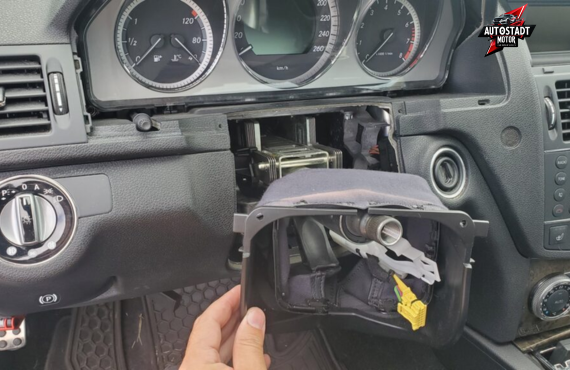
Not every steering complaint requires a complete steering rack replacement. For example, a Mercedes-Benz C-Class with a loose steering connection may need a different repair from an E-Class experiencing an electronic steering warning. Accurate diagnosis is therefore essential before replacing expensive components.
Whether you drive a Mercedes-Benz C-Class, E-Class, GLC, GLE, or another model, understanding the warning signs and arranging a professional inspection can help preserve predictable handling and long-term reliability.
Signs Your Car Needs Mercedes Steering Repair Near Me
Steering problems do not always begin with a complete loss of assistance. Often, the vehicle provides early warning signs that something needs attention. Recognizing these changes can help you arrange repairs before the problem becomes more serious.
1. Steering Wheel Feels Stiff or Heavy
A steering wheel that suddenly requires more effort than usual is one of the most noticeable symptoms.
In Mercedes models with hydraulic or electro-hydraulic power steering, low fluid, a leaking hose, or a failing pump may reduce steering assistance. Vehicles equipped with electric power steering can develop different faults involving the electric motor, sensors, wiring, or control system.
If the steering becomes particularly heavy during parking or low-speed turns, arrange an inspection instead of assuming that the problem is normal for an older vehicle.
2. Unusual Clicking, Knocking, or Grinding Noises
Steering-related noises can originate from several parts of the vehicle.
A clicking sound during a turn may indicate a problem with a related joint or suspension component. Knocking over uneven roads may point towards worn tie rods, ball joints, or other suspension parts. Grinding or whining noises may require inspection of the steering mechanism or assistance system.
Because different faults can produce similar sounds, the location and circumstances of the noise should be assessed carefully.
3. Steering Wheel Vibration
A vibrating steering wheel can make a Mercedes feel less stable and comfortable, particularly at higher speeds.
Possible causes include unbalanced wheels, tyre problems, worn suspension components, or loose steering connections. Consequently, vibration should not automatically be treated as a steering rack fault.
At AutoStadt Motor Services, the aim is to distinguish between steering, suspension, wheel, and tyre-related problems so that the recommended repair addresses the actual cause.
4. Excessive Play in the Steering Wheel
If you turn the steering wheel slightly before the front wheels respond, the vehicle may have excessive steering play.
Potential causes include worn tie rod ends, steering linkage problems, steering rack wear, or loose connections. The significance of the symptom depends on the amount of movement and the condition of the affected components.
Excessive play should be checked promptly because predictable steering response is essential for safe driving.
5. Mercedes Steering Pulls to One Side
A vehicle that consistently drifts left or right may need attention.
Incorrect wheel alignment, uneven tyre pressure, tyre wear, suspension damage, or certain steering faults can cause pulling. If the vehicle begins pulling after striking a pothole or kerb, the wheels and suspension should be inspected.
Although wheel alignment can resolve some cases, it will not correct every underlying mechanical fault. Any damaged components should be addressed before alignment is performed.
6. Power Steering Fluid Leaks
Some Mercedes-Benz models use hydraulic or electro-hydraulic steering systems that require the specified power steering fluid.
Fluid beneath the vehicle or wetness around steering hoses, connections, the pump, or steering rack may indicate a leak. If the fluid level continues to drop, simply topping it up is not a lasting solution.
Not all Mercedes vehicles use conventional hydraulic steering fluid, so the system type must be confirmed before adding anything.
7. Steering Warning Lights or Electronic Faults
Modern Mercedes-Benz vehicles rely on electronic systems to monitor and support various steering functions.
A steering warning message may indicate a fault involving steering assistance, sensors, electrical connections, or a control module. In some cases, the vehicle may also display other warning messages.
If steering assistance changes unexpectedly or the steering wheel becomes difficult to operate, stop somewhere safe and arrange professional assistance. Do not ignore a warning simply because the vehicle still moves.
Why Choose AutoStadt Motor Services for Mercedes Steering Repair Near Me
Finding Mercedes steering repair near me involves more than choosing a nearby garage. The workshop should identify the problem accurately, explain the available repair options, and avoid unnecessary parts replacement.
Mercedes-Focused Diagnostic Approach
Different Mercedes-Benz generations use different steering designs and electronic systems. Therefore, the diagnostic procedure should match the particular model and its equipment.
An inspection may involve checking steering components, reviewing warning messages, examining relevant connections, and using appropriate diagnostic equipment when an electronic fault is suspected.
This helps narrow down the possible causes before repair work begins.
Inspection of Steering and Suspension Components
Steering performance depends on more than the steering rack alone.
Tie rods, ball joints, control arms, suspension joints, tyres, and wheel alignment can all influence how a vehicle responds on the road. A thorough assessment helps distinguish between these related systems.
For example, a Mercedes-Benz GLC with knocking over bumps may require a different solution from a C-Class with a power steering fluid leak.
Repair Recommendations Based on the Actual Fault
Replacing a complete steering assembly can be expensive. Fortunately, not every problem requires that level of repair.
Depending on the findings, the solution may involve replacing a worn linkage, repairing a leaking connection, addressing an electrical issue, correcting wheel alignment, or carrying out a more substantial steering rack repair.
AutoStadt Motor Services can assess the problem and recommend a repair suited to the vehicle’s condition.
Attention to Driving Conditions in Dubai
Dubai drivers regularly encounter heavy traffic, tight parking spaces, speed bumps, and varying road surfaces. These conditions make consistent steering response and well-maintained suspension components important.
Arranging an inspection when symptoms first appear can help prevent a minor concern from developing into a more disruptive problem.
Service for Different Vehicle Makes
Although Mercedes-Benz requires model-specific attention, many steering principles apply across other vehicles too. Toyota, Nissan, BMW, and Audi models also use different combinations of steering, suspension, and electronic assistance technologies.
The important factor is to diagnose the individual vehicle rather than assume that the same repair applies to every make.
How Our Mercedes Steering Repair Near Me Process Works
A reliable steering repair begins with identifying the complaint and ends with checking that the original problem has been addressed. At AutoStadt Motor Services, the process can include the following stages.
Step 1: Discuss the Steering Symptoms
The first step is to understand what the driver has noticed.
The technician may ask whether the steering feels heavy, makes noise, vibrates at certain speeds, pulls to one side, or displays a dashboard warning. Information about when the problem started and whether it changes during parking or highway driving can help guide the inspection.
Step 2: Inspect the Steering System
The vehicle is examined for visible wear, looseness, damage, or leakage in relevant components.
Depending on the model, this may include the steering rack, tie rods, steering column connections, hydraulic hoses, pump, and related joints. The suspension and tyres may also require inspection because they can produce symptoms similar to steering faults.
Step 3: Perform Electronic Diagnosis Where Required
If the vehicle displays a steering warning or experiences intermittent loss of assistance, electronic diagnosis may be necessary.
Appropriate diagnostic equipment can help identify stored fault codes and provide information about the affected system. However, a fault code should be interpreted alongside physical inspection and other test results rather than treated as automatic proof that a particular part needs replacement.
Step 4: Confirm the Root Cause
After the initial checks, the technician evaluates the findings to determine the likely source of the problem.
For instance, heavy steering might result from a hydraulic issue, an electric assistance fault, or a mechanical restriction. Likewise, steering vibration may originate from wheels or suspension components rather than the steering rack.
Confirming the root cause helps reduce unnecessary repairs.
Step 5: Carry Out the Required Repair
Once the fault has been identified, the appropriate repair can be performed.
Depending on the condition of the vehicle, this may involve replacing worn steering linkage components, repairing a leak, addressing a power steering pump problem, servicing related suspension components, or carrying out an approved repair or replacement of the steering rack.
If the vehicle uses hydraulic steering, the correct fluid specification must be followed. For electric power steering systems, the repair procedure must suit the specific electrical and mechanical design.
Step 6: Check Alignment and Related Components
Some steering repairs can affect wheel alignment or require additional checks of the suspension geometry.
Where necessary, alignment should be checked after the relevant mechanical work is completed. This helps ensure that the vehicle tracks correctly and that the steering wheel sits in the appropriate position.
Step 7: Verify Steering Performance
The final stage is to check the repair and confirm that the original symptoms have been addressed.
Relevant checks may include steering response, unusual noises, warning messages, fluid leakage where applicable, and the condition of related components. A suitable road test may also be performed when the vehicle’s condition permits it.
If the steering is unsafe to operate, the vehicle should not be road-tested until the necessary safety concerns have been resolved.
Mercedes Steering Maintenance Tips for Dubai Drivers
Preventive maintenance can help identify developing steering problems before they become serious.
First, pay attention to changes in steering effort. If the steering becomes heavier, develops unusual play, or responds inconsistently, arrange an inspection instead of waiting for the symptoms to worsen.
Second, do not ignore knocking sounds or vibration. These symptoms can involve steering, suspension, wheels, or tyres, and early diagnosis helps identify the correct repair.
Third, check tyre pressures according to the vehicle manufacturer’s recommendations. Incorrect pressure can affect handling and may contribute to an impression that the steering system is not operating correctly.
Fourth, if your Mercedes uses hydraulic power steering, have fluid levels and potential leaks checked according to the manufacturer’s requirements. Use only the specified fluid; the wrong product can damage system components.
Finally, pay attention to dashboard warnings. Electronic steering faults may not be visible during a basic visual inspection, so professional diagnostic testing may be needed.
Frequently Asked Questions About Mercedes Steering Repair Near Me in Dubai
1. Where can I get Mercedes steering repair near me in Dubai?
Look for a workshop that can inspect the steering and suspension systems, diagnose electronic assistance faults when necessary, and explain the repair before replacing parts. AutoStadt Motor Services is an option for Dubai drivers seeking assistance with Mercedes steering problems. The appropriate repair depends on the model, the symptoms, and the inspection findings.
2. How much does Mercedes steering repair cost in Dubai?
The cost depends on the cause of the problem, the Mercedes model, parts availability, and the labour involved. Replacing a worn tie rod end may be less involved than repairing or replacing a steering rack or an electronic steering component. A diagnostic inspection is the best starting point because it helps establish which parts actually require attention before a repair estimate is prepared.
3. Can I drive my Mercedes if the steering becomes stiff?
Suddenly heavy steering can make the vehicle difficult to control, especially during turns or emergency manoeuvres. If steering assistance fails, a warning appears alongside a change in steering behaviour, or the wheel becomes unusually difficult to turn, stop in a safe location and arrange professional assistance. Do not continue driving simply because the vehicle can still move.
4. Why does my Mercedes make a knocking noise when turning?
A knocking noise can come from worn tie rods, ball joints, suspension joints, steering linkages, or other components. The sound alone is not enough to identify the failed part. A physical inspection is necessary to determine where the noise originates and whether the problem affects steering safety. If the noise is accompanied by loose steering or unusual handling, arrange an inspection promptly.
5. Does every Mercedes-Benz use power steering fluid?
No. The steering technology varies by model and generation. Some Mercedes-Benz vehicles use hydraulic or electro-hydraulic assistance, while others use electric power steering. Electric systems do not require conventional hydraulic steering fluid. Before adding fluid or requesting a particular repair, confirm which system your vehicle uses and have the relevant components checked.
Conclusion
Mercedes steering repair near me is an important search when your vehicle develops heavy steering, unusual noises, excessive play, fluid leakage, vibration, or an electronic steering warning. These symptoms can originate from different components, so identifying the underlying fault is more useful than replacing parts based on guesswork.
For Dubai drivers, maintaining a dependable steering system helps preserve vehicle control, handling, and driving comfort. Early inspection can also help identify related suspension or tyre problems that may otherwise be overlooked.
AutoStadt Motor Services can help assess Mercedes steering concerns and recommend an appropriate repair based on the vehicle’s condition. Whether the issue involves steering linkage, the steering rack, hydraulic assistance, suspension components, or an electronic fault, accurate diagnosis should guide the next step.
If your Mercedes no longer steers as smoothly or predictably as it should, arrange a professional inspection rather than ignoring the warning signs. Addressing the problem promptly is a practical way to support safer, more reliable driving in Dubai.


Leave a Comment