
Lincoln coolant system repair is essential for maintaining engine performance, preventing overheating and protecting your vehicle from expensive mechanical damage. Lincoln vehicles are designed to deliver a combination of luxury, comfort and powerful performance. However, like every modern vehicle, they depend on an efficient engine cooling system to maintain the correct operating temperature, particularly in Dubai’s demanding driving conditions.
High ambient temperatures, heavy traffic, long journeys and frequent stop-and-go driving can put additional pressure on a vehicle’s cooling system. If the system cannot regulate engine temperature properly, it may result in coolant leaks, radiator problems, water pump failure or engine overheating.
Whether you own a Lincoln Navigator, Aviator, Corsair or Continental, maintaining the cooling system is important for long-term reliability. Even a relatively small coolant leak can develop into a serious problem if ignored.
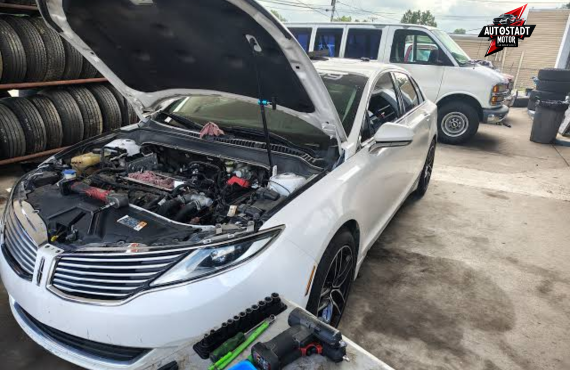
At AutoStadt Motor Services, we provide professional automotive maintenance and repair solutions for Dubai car owners. Our approach to Lincoln coolant system repair focuses on identifying the source of cooling problems, inspecting essential components and recommending appropriate solutions to maintain reliable engine temperature.
From radiator inspection and coolant leak detection to thermostat replacement and water pump repairs, our technicians help address cooling system problems before they cause more extensive engine damage.
Signs Your Car Needs Lincoln Coolant System Repair
Your Lincoln’s cooling system generally provides warning signs when a component is damaged or no longer operating efficiently. Recognising these symptoms early can help prevent unexpected breakdowns and costly engine repairs.
1. Engine Overheating
Engine overheating is one of the most serious indications that your Lincoln may require coolant system repair.
The temperature gauge may rise above its normal operating range, or you may receive an engine temperature warning on the dashboard.
Several problems can contribute to overheating, including:
Low engine coolant levels.
Blocked or damaged radiator.
Faulty thermostat.
Malfunctioning water pump.
Cooling fan failure.
Internal or external coolant leakage.
Dubai’s hot weather makes overheating particularly concerning. If your temperature warning appears, stop driving safely and switch off the engine. Do not open the radiator or coolant reservoir cap while the system is hot because pressurised coolant can cause serious burns.
2. Coolant Leaking Under Your Lincoln
Finding coloured liquid underneath your parked vehicle may indicate a coolant leak.
Depending on the coolant formulation, it may appear orange, yellow, pink, green or another colour. However, colour alone cannot confirm that the fluid is engine coolant.
Common coolant leakage locations include:
Radiator hoses and connections.
Radiator tanks and seals.
Water pump seals.
Thermostat housing.
Coolant reservoir.
Radiator core.
Heater hoses.
A small leak may initially cause only a gradual drop in coolant levels. Nevertheless, continued coolant loss can reduce the cooling system’s ability to regulate engine temperature.
AutoStadt Motor Services can inspect suspected leakage points and recommend suitable repairs.
3. Frequent Coolant Level Drops
If you regularly need to add coolant to your Lincoln, the cooling system may have an underlying problem.
A properly functioning sealed cooling system should not require frequent coolant top-ups under normal operating conditions.
Repeated coolant loss may indicate a damaged hose, leaking radiator, faulty reservoir cap, water pump seal failure or, in more serious cases, an internal engine leak.
Simply adding more coolant without investigating the cause will not resolve the problem.
A professional cooling system inspection can help identify where the coolant is disappearing and prevent further complications.
4. Steam Coming From the Engine Bay
Steam or vapour coming from underneath the bonnet can indicate excessive engine temperature or coolant escaping onto hot engine components.
This condition should never be ignored.
Possible causes include a burst radiator hose, leaking coolant connection, damaged radiator or overheating engine.
If you notice steam, pull over safely, switch off the engine and allow it to cool. Avoid opening the coolant reservoir until the system has cooled completely.
Arrange professional inspection before continuing your journey.
5. Faulty Radiator or Cooling Fan
The radiator plays an important role in removing heat from the engine coolant. Meanwhile, cooling fans help maintain airflow through the radiator, particularly when the vehicle is stationary or moving slowly.
If either component stops functioning correctly, engine temperature may increase.
For example, your Lincoln might maintain normal temperature on an open road but begin overheating in traffic. This can indicate a cooling fan, fan control or airflow problem.
Radiator blockages, damaged fan motors and electrical faults should be inspected before they lead to further cooling system problems.
6. Unusual Smell From the Engine Compartment
A sweet or unusual smell around the engine bay may indicate leaking coolant.
When coolant contacts hot engine surfaces, it can produce a noticeable odour. You might also notice dried coolant residue around hoses, radiator connections or the reservoir.
Although the smell may initially seem harmless, it can indicate a developing leak.
Having the system checked early can help prevent coolant loss and unexpected overheating.
7. Heater Performance Changes
Your vehicle’s heating system uses engine coolant to transfer heat into the passenger cabin.
If the heater suddenly starts blowing cooler air or its performance becomes inconsistent, there may be an issue with coolant circulation, low coolant levels or a restricted heater core.
Air trapped inside the cooling system can also affect heater performance.
A proper inspection can help determine whether the problem is related to the cooling system, heater core or associated controls.
Why Choose AutoStadt Motor Services for Lincoln Coolant System Repair?
Choosing an experienced automotive workshop is important when dealing with cooling system problems. Lincoln vehicles contain interconnected mechanical and electronic components, so identifying the actual source of a fault is essential.
AutoStadt Motor Services focuses on providing practical automotive repair and maintenance solutions for different vehicle brands in Dubai.
Experienced Automotive Technicians
Cooling system repair requires an understanding of how the radiator, thermostat, water pump, hoses and coolant circulation work together.
Replacing one component without checking the complete system may leave the original problem unresolved.
Our technicians follow a diagnostic approach to investigate overheating, coolant leakage and circulation-related concerns before recommending repair work.
Complete Cooling System Inspection
A cooling system consists of several components that must operate together to maintain stable engine temperature.
Depending on your vehicle’s symptoms, our inspection may cover:
Radiator condition and cooling efficiency.
Upper and lower radiator hoses.
Water pump operation.
Thermostat functionality.
Coolant reservoir and pressure cap.
Cooling fan motors and electrical connections.
Coolant temperature sensors.
Heater core and related hoses.
Coolant circulation and system pressure.
This inspection helps identify damaged components and potential weaknesses that could affect cooling performance.
Solutions for Different Lincoln Models
Different Lincoln models may have different engine configurations and cooling system requirements.
Whether you own a Lincoln Navigator, Aviator, Corsair or Continental, repairs should be performed according to the vehicle’s specifications.
Our garage also provides automotive maintenance solutions for brands such as BMW, Mercedes-Benz, Toyota and Nissan.
This experience across different vehicle platforms supports a comprehensive approach to diagnosing mechanical and cooling system problems.
Accurate Coolant Leak Detection
A visible coolant leak is not always easy to locate. Coolant can travel along engine components before dripping onto the ground, making the original leakage point difficult to identify.
Depending on the suspected problem, technicians may use cooling system pressure testing and visual inspection to locate leaks.
Identifying the actual source helps avoid unnecessary replacement of hoses, radiators or other components.
Quality Repair Recommendations
Not every cooling system problem requires extensive repairs.
For example, a loose connection or damaged hose may be responsible for coolant loss, while a severely blocked radiator may require replacement.
At AutoStadt Motor Services, the focus is on understanding the problem and recommending suitable repairs based on the vehicle’s condition.
Preventive Maintenance for Dubai Conditions
Dubai’s high temperatures make cooling system maintenance particularly important.
Regular inspections can help identify deteriorating hoses, weak connections, coolant contamination and radiator problems before they affect engine reliability.
Our team aims to help vehicle owners maintain their cooling systems and reduce the risk of unexpected overheating.
How Our Lincoln Coolant System Repair Process Works
At AutoStadt Motor Services, we follow a structured repair process to investigate cooling system problems and restore proper coolant circulation.
Step 1: Initial Vehicle Inspection
The process begins with understanding the symptoms experienced by the vehicle owner.
Our technicians may ask whether the Lincoln has been overheating, losing coolant, producing steam or displaying a temperature warning.
We also inspect the engine compartment for visible coolant residue, damaged hoses, loose connections and signs of leakage.
This initial assessment helps identify areas that require further investigation.
Step 2: Cooling System Pressure Testing
A pressure test can help identify external coolant leaks that may not be visible during a basic inspection.
The cooling system is pressurised using suitable testing equipment according to the manufacturer’s specifications.
Technicians then inspect the radiator, hoses, connections, reservoir and other accessible components for pressure loss or leakage.
The reservoir or radiator pressure cap may also require testing if it cannot maintain the specified system pressure.
Step 3: Radiator, Thermostat and Water Pump Inspection
Once the initial diagnosis is complete, attention turns to the main cooling components.
The radiator is checked for physical damage, leakage and possible internal or external blockage.
The thermostat is inspected to determine whether it opens and closes correctly according to operating temperature.
The water pump is also examined for leakage, bearing noise and possible circulation problems.
If any component is found to be defective, the appropriate repair or replacement is recommended.
Step 4: Coolant Leak Repair and Component Replacement
After identifying the fault, technicians proceed with the necessary repair work.
Depending on the condition of the vehicle, this may include:
Radiator repair or replacement.
Water pump replacement.
Thermostat replacement.
Radiator hose replacement.
Coolant reservoir repair or replacement.
Pressure cap replacement.
Cooling fan motor repair.
Repair of leaking connections.
The correct replacement parts and specifications are important for maintaining reliable cooling system operation.
Step 5: Coolant Replacement and System Bleeding
If the coolant is contaminated, deteriorated or needs to be drained during repairs, the system may require fresh coolant.
The replacement coolant must meet the manufacturer’s specifications for the particular Lincoln model.
After refilling, the cooling system must be properly bled to remove trapped air.
Air pockets can restrict coolant circulation, cause temperature fluctuations and reduce heating performance.
The correct filling and bleeding procedure helps restore consistent coolant flow throughout the system.
Step 6: Final Testing and Temperature Verification
After completing the repair, the cooling system is tested again.
Technicians may monitor engine temperature, cooling fan operation, coolant circulation and system pressure.
The vehicle is also checked for signs of leakage and abnormal temperature changes.
This final inspection helps confirm that the identified problem has been addressed and the cooling system is operating as expected.
Essential Lincoln Coolant System Maintenance Tips for Dubai Drivers
Preventive maintenance is one of the most effective ways to protect your Lincoln’s engine from cooling-related problems.
Because vehicles in Dubai operate in challenging weather conditions, paying attention to the following maintenance practices can help maintain cooling system reliability.
Check coolant levels regularly: Inspect the coolant reservoir when the engine is completely cold. If the level repeatedly drops, arrange an inspection.
Use manufacturer-approved coolant: Different Lincoln models may require specific coolant formulations. Avoid mixing incompatible coolant types.
Inspect radiator hoses: Heat and ageing can cause hoses to become brittle, swollen or cracked. Replace damaged hoses before they fail.
Keep the radiator clean: Dust and debris can accumulate around the radiator and condenser, restricting airflow. Arrange suitable cleaning when necessary.
Monitor engine temperature: Pay attention to dashboard temperature warnings and unusual fluctuations. Never ignore repeated overheating.
Inspect the water pump: Coolant residue, unusual noise or leakage around the water pump may indicate a developing fault.
Follow scheduled maintenance: Refer to your Lincoln owner’s manual for recommended coolant inspection and replacement intervals.
These maintenance practices can help reduce the risk of cooling system failure and support dependable engine performance.
Frequently Asked Questions About Lincoln Coolant System Repair in Dubai
1. Why Does My Lincoln Keep Losing Coolant?
If your Lincoln regularly loses coolant, there may be a leak somewhere in the cooling system. Common causes include damaged radiator hoses, leaking radiator connections, faulty water pump seals, cracked reservoirs or a defective pressure cap.
In more serious situations, coolant may be entering the engine internally because of a head gasket problem or another internal engine fault.
Repeatedly topping up the coolant is not a permanent solution. AutoStadt Motor Services can inspect the cooling system, perform suitable leak detection and identify the source of coolant loss before recommending repairs.
2. How Much Does Lincoln Coolant System Repair Cost in Dubai?
The cost of Lincoln coolant system repair depends on the specific problem, vehicle model, damaged components and replacement parts required.
For instance, replacing a radiator hose generally involves a different repair cost compared with replacing a radiator, thermostat or water pump.
The condition of the complete cooling system can also influence the final estimate.
A professional inspection is the best way to determine the actual repair requirements. AutoStadt Motor Services can assess your Lincoln and recommend suitable solutions based on the diagnosis.
3. How Often Should I Replace Coolant in My Lincoln?
Coolant replacement intervals depend on the Lincoln model, engine configuration and coolant specification.
Different coolant formulations have different service-life recommendations. Therefore, it is important to follow the maintenance schedule provided in your vehicle’s owner’s manual.
In addition to scheduled replacement, coolant should be inspected for contamination, incorrect concentration and signs of deterioration.
If you notice repeated coolant loss, discolouration or overheating, arrange an inspection rather than waiting for the next scheduled service.
4. Can I Drive My Lincoln When the Engine Is Overheating?
Driving with an overheating engine is not recommended. Excessive temperature can damage important engine components, including cylinder heads, gaskets and internal engine parts.
If the temperature gauge rises into the danger zone or an overheating warning appears, stop somewhere safe and switch off the engine.
Never remove the coolant reservoir or radiator cap while the engine is hot. Wait until the system has cooled before any inspection, and arrange professional assistance if the problem persists.
Continuing to drive with insufficient coolant or a malfunctioning water pump can turn a manageable repair into extensive engine damage.
5. Where Can I Get Professional Lincoln Coolant System Repair in Dubai?
If you are experiencing coolant leaks, engine overheating, radiator problems or unexplained coolant loss, AutoStadt Motor Services can help.
Our automotive repair services include cooling system inspection, coolant leak detection, radiator maintenance, water pump replacement, thermostat-related repairs and coolant servicing.
Whether you drive a Lincoln Navigator, Aviator, Corsair or Continental, our team can assess your vehicle’s cooling system and recommend suitable repair solutions.
Contact AutoStadt Motor Services to discuss your Lincoln’s symptoms and arrange a professional inspection in Dubai.
Conclusion
Maintaining an efficient cooling system is essential for protecting your Lincoln’s engine, especially in Dubai’s challenging climate. Problems such as coolant leakage, radiator blockage, thermostat failure and water pump damage can affect engine temperature and lead to serious mechanical complications if ignored.
Timely Lincoln coolant system repair helps identify developing problems, maintain proper coolant circulation and reduce the risk of unexpected breakdowns.
At AutoStadt Motor Services, we focus on identifying the source of cooling system faults and providing suitable automotive repair solutions. From radiator inspection and coolant leak detection to thermostat, water pump and hose replacement, our team aims to help Dubai car owners maintain reliable vehicle performance.
If your Lincoln is losing coolant, overheating or showing unusual temperature fluctuations, do not delay professional inspection. Contact AutoStadt Motor Services for dependable cooling system diagnosis and repair to keep your vehicle operating efficiently on Dubai roads.


Leave a Comment