
Mazda brake repair near me is an important search for Dubai drivers who want dependable braking performance, improved road safety, and professional automotive care. Whether you drive a Mazda 3, Mazda 6, Mazda CX-5, or another model in the Mazda range, maintaining your braking system is essential for safe driving in the UAE’s busy traffic conditions. Frequent stop-and-go traffic, high temperatures, and long journeys can gradually affect brake pads, discs, brake fluid, and other essential components.
At AutoStadt Motor Services, we help Mazda owners identify braking problems and find suitable repair solutions. Our approach focuses on accurate diagnosis, careful inspection, and practical recommendations based on your vehicle’s condition. Instead of replacing parts unnecessarily, we aim to identify the underlying cause of the problem and explain the available repair options.
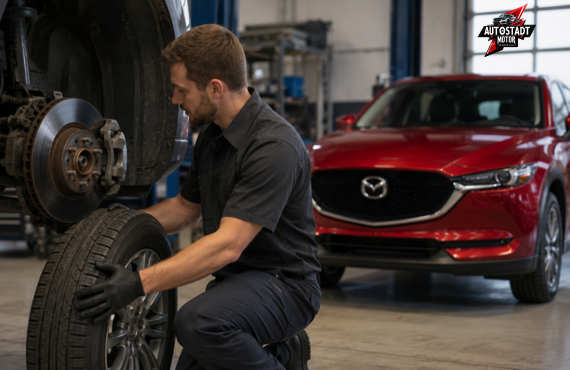
If your Mazda produces unusual braking noises, vibrates when slowing down, or takes longer than usual to stop, arranging a professional inspection is a sensible next step. Timely Mazda brake repair can help prevent additional component damage while supporting safe and comfortable driving throughout Dubai.
Signs Your Car Needs Mazda Brake Repair Near Me
Recognising brake problems early can help you avoid more expensive repairs and potentially dangerous driving situations. Although some warning signs develop gradually, others require immediate attention.
1. Squealing, Grinding, or Unusual Braking Noises
High-pitched squealing can indicate worn brake pads, although dust, moisture, and other conditions may also cause temporary noise. Grinding sounds are more concerning because they can indicate that the friction material has worn away and metal components are contacting each other.
If your Mazda makes unusual noises whenever you apply the brakes, arrange an inspection rather than assuming the problem will disappear. Continued driving with severely worn pads can damage the brake discs and increase repair costs.
At AutoStadt Motor Services, we inspect the braking components to determine whether the noise comes from worn pads, damaged rotors, loose hardware, or another issue.
2. A Soft or Spongy Brake Pedal
Your brake pedal should provide consistent resistance during normal operation. If it suddenly feels soft, spongy, or unusually easy to press, the hydraulic braking system may require attention.
Possible causes include air in the brake lines, old or contaminated brake fluid, a hydraulic leak, or a problem with the master cylinder. These issues can reduce braking effectiveness and should not be ignored.
A soft brake pedal that develops suddenly requires urgent assessment. If braking performance is significantly reduced, do not continue driving the vehicle; arrange professional assistance instead.
3. Steering Wheel or Vehicle Vibration
Does your Mazda shake when you apply the brakes? Vibration through the steering wheel or brake pedal can be associated with uneven brake disc surfaces, excessive disc runout, worn suspension components, or other mechanical issues.
For example, a Mazda CX-5 used regularly on Dubai roads may develop braking vibration as its components wear over time. However, the exact cause must be confirmed through inspection rather than assumed from the symptoms alone.
Professional Mazda brake disc repair or replacement may resolve the issue when the discs are responsible. If suspension or wheel components are involved, those problems must also be addressed.
4. Longer Stopping Distances
If your Mazda takes longer to stop than it normally does, its braking system may not be performing correctly. Worn pads, damaged discs, contaminated friction surfaces, deteriorated brake fluid, or a fault in the hydraulic or electronic braking system can contribute to reduced braking performance.
Dubai’s busy roads make dependable stopping power particularly important. Traffic congestion, sudden braking, and high-speed driving on major roads can place considerable demands on the braking system.
If you notice a significant change in stopping distance, have the vehicle inspected promptly. Avoid high-speed driving until the problem has been assessed.
5. Brake Warning Light on the Dashboard
A brake warning light can indicate several conditions, including low brake fluid, an engaged parking brake, or a problem with the braking system. An ABS warning light may indicate a separate fault affecting the anti-lock braking system.
The meaning depends on the warning symbol and your Mazda’s model. Check the owner’s manual and arrange a professional diagnosis rather than ignoring the warning.
If a brake warning appears alongside a soft pedal, fluid leakage, or reduced braking performance, stop safely and arrange recovery assistance.
6. Mazda Pulling to One Side During Braking
When you apply the brakes, your Mazda should generally slow down in a controlled, predictable manner. If it consistently pulls left or right, the cause could include a sticking brake caliper, uneven braking force, a tyre problem, or worn suspension components.
This symptom should be investigated because uneven braking can affect vehicle control. A technician can inspect the calipers, pads, discs, tyres, and relevant suspension components to identify the source.
Why Choose AutoStadt Motor Services for Mazda Brake Repair Near Me?
Choosing a suitable garage is important because your braking system directly affects your safety. AutoStadt Motor Services provides a customer-focused approach to Mazda brake repair in Dubai, helping vehicle owners understand their car’s condition and the work required.
Experienced Brake System Inspection
Effective brake repair begins with a proper diagnosis. Replacing brake pads without checking the discs, calipers, fluid, and related components may leave the original problem unresolved.
Our inspection approach focuses on identifying visible wear, checking the condition of relevant components, and investigating the symptoms reported by the driver. Where appropriate, diagnostic equipment can help identify electronic braking or ABS-related faults.
This process helps establish a more suitable repair plan for your Mazda.
Mazda Brake Pad Replacement
Brake pads gradually wear down as they create friction against the brake discs. Their service life depends on driving habits, road conditions, vehicle weight, and the type of components installed.
Frequent traffic congestion and repeated braking can accelerate wear. During an inspection, technicians can assess the remaining pad material and determine whether replacement is necessary.
AutoStadt Motor Services can assist with Mazda brake pad replacement and related inspections. The appropriate parts should be selected according to your vehicle’s model, year, specifications, and braking system.
Brake Disc Inspection and Replacement
Brake discs must provide a suitable friction surface for consistent braking. Excessive wear, scoring, cracking, or measurements outside the manufacturer’s specifications may mean that repair or replacement is necessary.
However, brake discs should not automatically be replaced every time new pads are installed. Their condition, thickness, and service limits should be checked first.
For Mazda 3 and Mazda 6 owners, a proper assessment helps determine whether the existing discs can remain in service or require replacement.
Brake Fluid and Hydraulic System Checks
Brake fluid transfers force through the hydraulic braking system. Over time, it can absorb moisture, while leaks or contamination may compromise performance.
During brake servicing, the technician may check the fluid condition, inspect accessible hydraulic components, and investigate any signs of leakage. Fluid replacement should follow Mazda’s recommended specifications and maintenance schedule.
These checks are particularly important when the pedal feels abnormal or the vehicle displays a brake-related warning.
Service for Different Mazda Models
Mazda vehicles share certain braking principles, but their component specifications and maintenance requirements can differ. AutoStadt Motor Services can assess the needs of vehicles such as the Mazda 3, Mazda 6, Mazda CX-5, Mazda CX-9, and Mazda CX-30.
We can also help owners of other makes, including Toyota, Nissan, BMW, and Mercedes-Benz, with appropriate brake inspections and maintenance.
The objective is to recommend work that matches the individual vehicle instead of applying the same repair procedure to every car.
Clear Recommendations and Practical Maintenance Advice
Brake repairs can involve several components, so understanding the proposed work matters. A professional service process should explain the identified fault, the recommended solution, and any additional concerns discovered during inspection.
We aim to help customers make informed maintenance decisions and understand which issues require immediate attention.
How Our Mazda Brake Repair Near Me Process Works
A structured repair process helps ensure that the underlying problem is investigated before work begins. At AutoStadt Motor Services, the process can include the following steps, depending on the vehicle and symptoms.
Step 1: Discuss the Symptoms
The first step is to understand what you have noticed. You may hear squealing, experience vibration, feel a soft brake pedal, or see a dashboard warning light.
Sharing when the problem occurs can help narrow the investigation. For example, noise during light braking may require a different assessment from vibration during repeated braking.
Step 2: Inspect the Braking System
The technician examines relevant braking components, including the pads, discs, calipers, and accessible hydraulic parts. The inspection may also include checking brake fluid and identifying visible leakage or uneven wear.
If an electronic warning is present, further diagnostic checks may be necessary.
Step 3: Identify the Cause
After inspection, the findings help determine whether the problem involves worn pads, damaged discs, a sticking caliper, hydraulic concerns, or an electronic fault.
This step is important because similar symptoms can have different causes. For example, vibration may result from brake disc problems, but worn suspension components can sometimes produce similar complaints.
Step 4: Explain the Recommended Repairs
Once the issue has been identified, the recommended work should be explained before repairs proceed. Depending on the findings, this may involve brake pad replacement, brake disc replacement, caliper servicing, fluid replacement, or further system diagnosis.
The correct parts and procedures depend on your Mazda’s specifications. Any additional repairs should be discussed rather than assumed.
Step 5: Complete the Repair and Perform Checks
After the approved work is completed, relevant components should be checked to ensure correct installation and operation. Depending on the repair, this may include pedal checks, hydraulic checks, electronic system checks, and a controlled road test when safe and appropriate.
The aim is to confirm that the braking system operates as expected before the vehicle returns to normal use.
Step 6: Receive Maintenance Guidance
Finally, ask about future inspections, brake fluid maintenance, and signs of wear to monitor. Following the manufacturer’s maintenance schedule and addressing unusual symptoms early can help maintain braking performance and reduce avoidable repair costs.
Frequently Asked Questions About Mazda Brake Repair Near Me in Dubai
1. Where Can I Find Mazda Brake Repair Near Me in Dubai?
If you are searching for Mazda brake repair near me in Dubai, AutoStadt Motor Services is an option to consider for brake inspections, pad replacement, disc assessment, and related maintenance. Before arranging your visit, contact the garage to confirm service availability, your Mazda model’s requirements, and the estimated repair cost. Providing details about the symptoms can help the team understand what needs to be checked.
2. How Much Does Mazda Brake Repair Cost in Dubai?
The cost depends on the specific fault, your Mazda’s model and year, the parts required, and the amount of labour involved. Replacing worn brake pads will generally involve different costs from replacing brake discs, repairing a caliper, or diagnosing an ABS fault. Additional work may be necessary if the inspection identifies related problems. For an accurate estimate, request an assessment and a breakdown of the recommended parts and labour before approving the repair.
3. How Often Should I Replace My Mazda Brake Pads?
There is no single replacement interval that applies to every Mazda. Brake pad life depends on traffic conditions, driving habits, vehicle weight, road use, and the type of pads installed. Frequent stop-and-go driving in Dubai may increase wear compared with driving mainly on open roads. Follow the maintenance guidance for your specific vehicle and have the pads inspected regularly. Replace them when their remaining material reaches the applicable service limit or when a qualified technician identifies unsafe wear.
4. Can I Drive My Mazda if the Brakes Are Making Noise?
Minor, temporary squealing can sometimes result from moisture or brake dust. However, persistent squealing may indicate pad wear, while grinding, reduced braking performance, fluid leakage, or a suddenly soft pedal can signal a serious problem. Do not assume that every noise is harmless. If your Mazda experiences grinding or compromised braking, stop driving as soon as it is safe and arrange professional assistance. An inspection can determine whether the pads, discs, calipers, or other components require attention.
5. Do You Repair Mazda ABS and Brake Warning Light Problems?
ABS and brake warning lights can indicate different faults, so the cause should be diagnosed before parts are replaced. Possible issues include wheel-speed sensors, wiring, hydraulic components, low brake fluid, or other system faults, depending on the warning and vehicle. A technician may need to scan the vehicle’s electronic systems and carry out additional tests. Contact AutoStadt Motor Services to confirm diagnostic availability for your Mazda. If the warning appears with reduced braking performance or a soft pedal, do not continue driving; arrange recovery assistance.
Conclusion
Mazda brake repair near me is more than a convenience-based search; it is an important step towards maintaining vehicle safety and dependable braking performance in Dubai. From worn brake pads and damaged discs to unusual noises, fluid concerns, and ABS warnings, identifying problems early can help prevent further damage and reduce the risk of unsafe driving.
AutoStadt Motor Services can help Mazda owners investigate braking symptoms, assess component condition, and identify suitable repair options. Whether you drive a Mazda 3, Mazda 6, Mazda CX-5, or another Mazda model, the right maintenance plan should reflect your vehicle’s specifications and actual condition.
If your Mazda is showing signs of brake trouble, arrange a professional inspection before the problem becomes more serious. Contact AutoStadt Motor Services to discuss your symptoms, confirm service availability, and request a repair estimate. Regular inspections, appropriate replacement parts, and timely maintenance can help keep your Mazda’s braking system in suitable working condition for Dubai’s demanding roads.


Leave a Comment