
Mercedes steering oil leak repair is essential when your vehicle begins losing steering fluid, develops unusual noises while turning, or becomes harder to manoeuvre at low speeds. Mercedes-Benz vehicles are designed to deliver controlled handling, comfort, and responsive steering. However, worn seals, damaged hoses, leaking connections, or other component faults can affect steering performance and should be investigated promptly.
For drivers in Dubai, maintaining a reliable steering system is particularly important. Daily traffic, frequent parking manoeuvres, long commutes, and high ambient temperatures place considerable demands on vehicles. A small leak may initially leave only a few drops beneath the car, but continued fluid loss can lead to reduced steering assistance and potentially damage other components in a hydraulic steering system.
At AutoStadt Motor Services, Mercedes steering oil leak repair begins with identifying the source of the problem. Rather than assuming every leak requires a steering pump or steering rack replacement, the appropriate components are inspected to establish the cause and recommend a suitable repair.
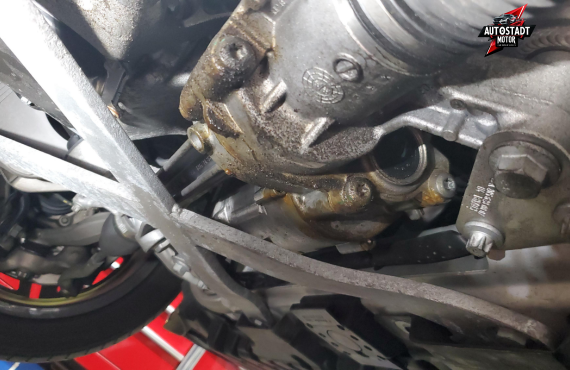
It is also important to recognise that not every Mercedes-Benz model uses conventional hydraulic power steering. Depending on the model year and steering configuration, a vehicle may use hydraulic, electro-hydraulic, or electric power steering. Electric systems do not use conventional steering fluid, so the correct system must be identified before any repair is recommended.
Signs Your Car Needs Mercedes Steering Oil Leak Repair
Steering problems can develop gradually or appear suddenly. Recognising the warning signs early helps you arrange an inspection before the fault becomes more serious.
Fluid Leaking Beneath the Vehicle
One of the most noticeable signs is a wet patch beneath the front of your Mercedes after parking.
The fluid may collect around the engine bay, front subframe, steering rack, or nearby hoses. However, the location of a puddle does not always identify the original source because fluid can travel across surrounding components before dripping onto the ground.
Steering fluid should also not be confused with engine oil, coolant, or air-conditioning condensation. A technician can inspect the affected area and determine which system is responsible.
Heavy Steering During Parking
If your Mercedes steering wheel suddenly feels heavier than usual, the problem deserves attention.
On vehicles with hydraulic power steering, a low fluid level caused by leakage can reduce steering assistance. You may notice the difference when reversing into a parking space, making a tight turn, or manoeuvring through a narrow street.
Heavy steering can also result from electrical faults, mechanical wear, tyre problems, or other issues. Therefore, proper diagnosis is necessary before connecting the symptom to a fluid leak.
Whining or Groaning Noises
Unusual noises when turning the steering wheel can indicate a developing steering-system problem.
A hydraulic power steering pump may whine or groan when fluid is insufficient or air enters the system. Continuing to operate the system under these conditions can increase component wear.
If the noise becomes louder or occurs alongside heavy steering, arrange an inspection promptly. Avoid repeatedly turning the wheel to its limit in an attempt to test the problem.
Repeatedly Falling Steering Fluid Levels
If your Mercedes uses hydraulic steering and the reservoir level keeps dropping, the system should be checked for leakage.
Steering fluid is not normally consumed during ordinary operation. Consequently, repeated top-ups may conceal an unresolved problem rather than solve it.
The technician may need to inspect the reservoir, hoses, pump, connections, seals, and steering rack to determine where fluid is escaping.
Wetness Around Hoses or the Steering Rack
A leak is not always large enough to create a puddle. Sometimes, the first indication is oily residue around a hose connection, pump housing, or steering rack.
Ageing seals, deteriorated hoses, damaged connections, and component wear can contribute to this condition.
Early detection is useful because a minor leak may be easier to address than a fault that has continued long enough to affect other components.
Steering Performance Changes Unexpectedly
If your Mercedes develops inconsistent steering effort, unusual vibration, or a steering warning, do not assume that a fluid leak is automatically responsible.
Modern Mercedes-Benz vehicles can have electronically controlled steering systems, and some use electric assistance without hydraulic fluid. Diagnostic checks should therefore consider the vehicle’s actual configuration and any warning messages displayed.
Why Choose AutoStadt Motor Services for Mercedes Steering Oil Leak Repair
Finding the correct repair solution requires more than identifying fluid on the ground. The underlying cause must be confirmed so that the repair addresses the fault rather than just its visible symptoms.
Accurate Leak Diagnosis
At AutoStadt Motor Services, the inspection focuses on identifying the component responsible for the leak.
Depending on the Mercedes model, this may involve checking hydraulic lines, return hoses, pressure hoses, reservoir connections, pump seals, and steering rack components. The surrounding area may also need inspection to distinguish an active leak from old fluid residue.
This diagnostic approach helps reduce unnecessary parts replacement and supports a more informed repair decision.
Mercedes-Specific Repair Considerations
Mercedes-Benz models differ in their steering layouts, component designs, and maintenance requirements. A C-Class, E-Class, S-Class, and GLE may require different inspection procedures depending on their generation and equipment.
For this reason, identifying the exact model and steering configuration is an important part of the repair process.
The same principle applies to other manufacturers. A BMW 5 Series, Audi A6, Toyota Land Cruiser, or Nissan Patrol may have different steering-system requirements, even when the symptoms appear similar.
Repair Recommendations Based on the Actual Fault
A steering fluid leak does not automatically mean the steering rack has failed.
In some cases, a hose or connection may be responsible. In others, the issue may involve a pump seal, reservoir, or steering rack. The condition and repairability of the affected component should be assessed before deciding whether to repair or replace it.
This helps customers understand why a particular repair is necessary and what it is intended to resolve.
Attention to Fluid Specifications
Using the correct fluid is essential for vehicles equipped with hydraulic steering.
Different systems may require specific fluid types, and using an unsuitable product can cause compatibility problems or affect system performance. The correct specification should be verified against the vehicle’s requirements rather than selected simply because the fluid appears similar.
Convenient Maintenance for Dubai Drivers
Steering faults can be inconvenient when you rely on your Mercedes for commuting, family travel, or regular business journeys.
Arranging an inspection when the first symptoms appear can help you address the issue before it develops into a more disruptive problem. AutoStadt Motor Services can assess the reported symptoms and recommend the appropriate next steps.
How Our Mercedes Steering Oil Leak Repair Process Works
A structured repair process helps establish what has failed, what needs attention, and whether the repair has resolved the original concern.
Step 1: Understand the Symptoms
The process begins with information about the vehicle and the steering problem.
The technician may ask when the leak was first noticed, whether the steering has become heavier, whether noises occur during turning, and whether the fluid level has changed.
The Mercedes model, model year, and steering configuration are also relevant because not all vehicles use the same system.
Step 2: Inspect the Steering System
The relevant steering components are examined for signs of fluid loss, wear, damage, or abnormal operation.
On a hydraulic system, this can include the fluid reservoir, hoses, connections, pump, and steering rack. The inspection may also cover nearby areas where leaking fluid can accumulate.
If the vehicle uses electric power steering, the diagnostic approach will differ because there is no conventional steering fluid circuit to inspect.
Step 3: Locate the Source of the Leak
After identifying the general area, the technician investigates the suspected component more closely.
A hose may have deteriorated, a connection may be leaking, or a seal may have lost its ability to contain fluid. Leakage around the steering rack or pump may require further assessment to establish the extent of the problem.
Cleaning the affected area and checking for fresh leakage can sometimes help distinguish an active fault from residue left by an earlier spill or repair.
Step 4: Assess the Required Repair
Once the source is identified, the next step is to determine the appropriate solution.
A damaged hose may require replacement, while a leaking connection may need a different repair. If the steering rack or pump is responsible, the technician should evaluate its condition and the available repair options.
This stage also helps establish whether other components have been affected by low fluid levels or continued leakage.
Step 5: Carry Out the Repair
The confirmed fault is then addressed using a repair procedure appropriate for the vehicle.
Depending on the diagnosis, this may involve replacing a hose, repairing a connection, addressing a seal leak, or repairing or replacing a faulty steering component.
For hydraulic systems, the correct fluid specification must be followed. Any required bleeding procedure should also be completed according to the manufacturer’s requirements.
Step 6: Check Steering Operation and Leakage
After the repair, the affected system should be inspected again.
For hydraulic steering, this includes checking the fluid level and looking for signs of continued leakage. Steering operation should also be evaluated to determine whether the original symptoms have improved.
Where appropriate, a controlled operational check can help confirm that the system is functioning as expected.
The final assessment matters because replacing a component alone does not prove that the original problem has been fully resolved.
Preventive Maintenance for Mercedes Steering Systems in Dubai
Regular inspections can help identify steering-system problems before they cause significant inconvenience.
First, pay attention to changes in steering effort. If your Mercedes suddenly becomes harder to steer, arrange an inspection rather than assuming the problem will disappear.
Second, investigate recurring fluid spots. Cleaning the parking area will not solve the underlying fault, and repeatedly adding fluid is not a substitute for repairing a leak.
Third, avoid ignoring new whining or groaning noises, especially when they occur alongside fluid loss. These symptoms can indicate that the system needs attention.
Finally, follow the vehicle’s maintenance requirements and use the correct fluids and replacement components. Because steering configurations vary across Mercedes-Benz models, maintenance advice should be based on the specific vehicle rather than general assumptions.
If the steering becomes difficult to control, a warning appears with a sudden change in steering behaviour, or the vehicle has a substantial fluid leak, stop in a safe location and arrange professional assistance rather than continuing to drive.
Frequently Asked Questions About Mercedes Steering Oil Leak Repair in Dubai
1. What causes a Mercedes steering oil leak?
Common causes on hydraulically assisted Mercedes models include deteriorated hoses, leaking connections, worn seals, reservoir problems, and leakage from the power steering pump or steering rack. Age, component wear, and damage can contribute to these issues. However, the exact cause depends on the vehicle’s steering configuration and condition. A professional inspection is needed to identify the leaking component and determine the appropriate repair.
2. Can I drive my Mercedes with a steering fluid leak?
Driving with a steering fluid leak is not recommended without assessing its severity. If the fluid level becomes too low, hydraulic steering assistance may be reduced, and continued operation can damage the pump. If steering suddenly becomes heavy, difficult to control, or is accompanied by a warning, stop somewhere safe and arrange assistance. A small-looking leak should also be inspected because its rate of fluid loss may increase unexpectedly.
3. How much does Mercedes steering oil leak repair cost in Dubai?
The cost depends on the source of the leak, the Mercedes model, component accessibility, and whether repair or replacement is required. A leaking hose or connection may be less involved than a steering rack or pump repair. Parts availability and any additional damage can also affect the final amount. AutoStadt Motor Services can assess the vehicle and recommend a repair based on the confirmed fault rather than providing a misleading one-price-fits-all estimate.
4. Does every Mercedes-Benz need steering oil leak repair if the steering becomes heavy?
No. Heavy steering does not necessarily indicate a fluid leak. Some Mercedes models use electric power steering, which does not have conventional hydraulic steering fluid. Other possible causes include electrical faults, mechanical wear, tyre-related problems, or faults within the steering system. The correct diagnostic process begins by identifying the steering technology fitted to the vehicle and then checking the symptoms and relevant components.
5. Can a Mercedes steering rack be repaired instead of replaced?
In some cases, a steering rack may be repairable, but the decision depends on the type and extent of the damage, the specific model, and the availability of suitable repair options. A leak from a nearby hose or connection can also make the rack appear to be the source when it is not. The component should be inspected carefully before replacement is recommended. Repairing the actual cause can help avoid unnecessary expense, while a severely damaged rack may require replacement.
Conclusion
Mercedes steering oil leak repair is important when fluid loss, unusual steering noises, or changes in steering effort suggest a developing problem. Although a small leak may initially seem manageable, ignoring it can lead to reduced steering assistance and additional component damage in vehicles that use hydraulic steering.
The best approach is to identify the actual cause before choosing a repair. Whether the problem involves a hose, connection, seal, pump, or steering rack, the correct solution depends on the vehicle’s design and the condition of the affected components.
AutoStadt Motor Services offers professional inspection and repair support for Mercedes steering-related concerns in Dubai, with an emphasis on accurate diagnosis and vehicle-appropriate repair recommendations.
If your Mercedes is leaving fluid beneath the vehicle, repeatedly losing steering fluid, or showing unusual steering behaviour, arrange an inspection promptly. Addressing the issue early can help protect the steering system and maintain dependable vehicle operation.


Leave a Comment