
Mercedes mechanical repair is essential when your vehicle develops engine problems, unusual noises, transmission issues, suspension faults, or other mechanical concerns that affect its performance. Mercedes-Benz vehicles are engineered for comfort, performance, and advanced driving technology. However, like any vehicle, they require regular maintenance and timely repairs to remain reliable on the road.
For Mercedes owners in Dubai, mechanical problems deserve particular attention. Frequent stop-and-go traffic, long commutes, high operating temperatures, and demanding driving conditions can place additional stress on cooling systems, engine components, brakes, and suspension parts. A small warning sign that initially appears harmless may become a more expensive problem if it is ignored.
At AutoStadt Motor Services, the focus is on identifying mechanical faults accurately and recommending repairs according to the vehicle’s condition. Whether you drive a Mercedes-Benz C-Class for daily commuting, an E-Class for business travel, a GLE for family journeys, or an S-Class for premium comfort, understanding the source of a mechanical problem is the first step toward a reliable solution.
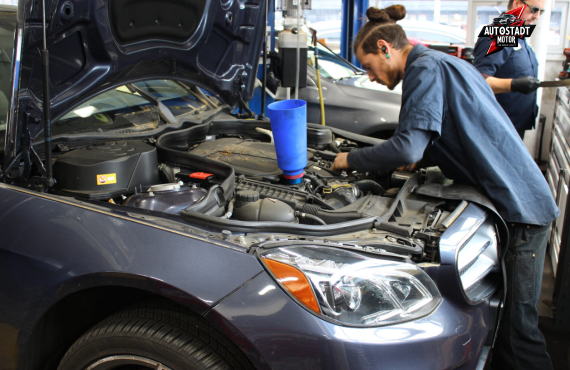
Mechanical repair covers much more than replacing damaged parts. It involves inspecting the relevant systems, interpreting warning signs, checking component condition, and verifying that the repair has resolved the original concern. With the right diagnostic approach and preventive maintenance, Mercedes owners can protect their vehicles’ performance while reducing the likelihood of unexpected breakdowns.
Signs Your Car Needs Mercedes Mechanical Repair
Mechanical problems do not always begin with a major breakdown. In many cases, your vehicle provides early warning signs that something needs attention. Recognizing these symptoms can help you arrange an inspection before the fault becomes more serious.
1. Unusual Engine Noises or Vibrations
A Mercedes engine should operate smoothly under normal conditions. If you begin hearing knocking, rattling, ticking, or grinding sounds, the engine and related components may require inspection.
The cause can vary depending on when the noise occurs. For example, a sound during a cold start may have a different cause from a noise that continues while accelerating. Worn belts, loose components, lubrication problems, engine mounts, or internal mechanical faults may contribute to unusual sounds.
Vibrations should also be investigated, particularly when they become stronger at idle or under acceleration. A damaged engine mount or an engine running unevenly can affect comfort and may indicate a developing mechanical issue.
2. Engine Overheating
An engine temperature that rises beyond its normal operating range is a warning sign that should never be ignored.
Potential causes include coolant leaks, a faulty thermostat, radiator problems, water pump failure, cooling fan issues, or restricted coolant circulation. In Dubai, where vehicles regularly operate in hot weather, maintaining the cooling system is especially important.
If your Mercedes displays an overheating warning, stop safely and switch off the engine when appropriate. Do not open a hot coolant reservoir because pressurized coolant can cause serious burns. Arrange professional assistance instead of continuing to drive an overheating vehicle.
3. Gear Shifting Problems
Automatic transmission problems may appear as delayed engagement, harsh gear changes, slipping, unusual noises, or hesitation during acceleration.
These symptoms do not necessarily mean the entire transmission needs replacement. Depending on the vehicle, the issue may involve fluid condition, a leak, electronic controls, sensors, or internal transmission components.
At AutoStadt Motor Services, the appropriate diagnostic process should consider the specific Mercedes model and transmission type before recommending a repair.
4. Suspension Noise and Uncomfortable Handling
Mercedes-Benz vehicles are designed to provide controlled handling and a comfortable ride. If your car starts producing clunking noises over speed bumps, feels unstable around corners, or develops excessive body movement, the suspension should be checked.
Possible causes include worn control arm bushings, damaged ball joints, deteriorated shock absorbers, or other suspension components. Vehicles equipped with air suspension may also experience system-specific faults.
Uneven tyre wear can provide another clue that suspension alignment or component condition needs attention.
5. Fluid Leaks Under the Vehicle
Fluid spots beneath your parked Mercedes may indicate a mechanical issue.
Engine oil, coolant, transmission fluid, brake fluid, and other automotive fluids have different purposes, so identifying the fluid and its source is important. A leak may originate from a hose, seal, gasket, reservoir, radiator, or another component.
Do not rely on the colour of a fluid alone to determine its identity. An inspection can help establish whether the leak requires immediate attention and which repair is appropriate.
6. Dashboard Warning Lights
Modern Mercedes vehicles use electronic monitoring systems to alert drivers when certain faults are detected. Engine warning lights, transmission messages, charging-system alerts, and other warnings may indicate that a component requires inspection.
However, a warning light does not automatically identify the failed part. Diagnostic trouble codes provide useful information, but they need to be interpreted alongside the vehicle’s symptoms and physical condition.
If a warning light flashes, the engine overheats, braking performance changes, or a critical system reports a serious fault, stop driving when it is unsafe to continue and arrange professional assistance.
Why Choose AutoStadt Motor Services for Mercedes Mechanical Repair
Selecting a workshop for Mercedes mechanical repair involves more than comparing prices. The quality of diagnosis, suitability of replacement parts, transparency of recommendations, and verification of completed work all matter.
Accurate Diagnosis Before Replacing Parts
Replacing components without confirming the underlying fault can waste money and leave the original problem unresolved.
For instance, engine overheating may result from a cooling fan, thermostat, coolant leak, or water pump problem. Similarly, poor acceleration could involve ignition, fuel delivery, air intake, transmission, or electronic control issues.
A structured inspection helps narrow down the possibilities and supports a more appropriate repair recommendation.
Repair Solutions for Different Mercedes Models
Mercedes-Benz produces a wide range of vehicles, from compact models to executive saloons and large SUVs. Although they share the same brand, their engines, transmissions, suspension systems, and electronic equipment can differ significantly.
The mechanical repair approach should therefore be based on the exact model, engine configuration, model year, and symptoms rather than assuming every Mercedes has identical requirements.
Attention to Cooling and Engine Performance
Dubai’s driving conditions make cooling-system condition and engine maintenance particularly important.
A mechanical inspection may include checking for coolant loss, abnormal engine temperatures, oil leaks, belt condition, and other relevant concerns. Identifying these issues early can help reduce the risk of further damage.
Transparent Repair Recommendations
Vehicle owners should understand what has been found, which components require attention, and why a repair is being recommended.
AutoStadt Motor Services can assess the reported symptoms and identify the relevant repair requirements. The recommended work should be explained clearly so customers can make informed decisions about maintenance and repairs.
A Broader Automotive Perspective
Mechanical systems often interact with one another. For example, worn suspension parts can affect tyre wear, while a cooling-system fault can lead to engine overheating.
A workshop should consider the overall condition of the vehicle rather than focusing exclusively on the most visible symptom. The same principle applies when maintaining other vehicles, such as a BMW 5 Series, Audi Q7, Toyota Land Cruiser, or Nissan Patrol. Each vehicle requires an inspection suited to its own design and mechanical requirements.
How Our Mercedes Mechanical Repair Process Works
A systematic repair process helps ensure that the original complaint is investigated properly and that the selected solution addresses the confirmed fault.
Step 1: Discuss the Vehicle’s Symptoms
The first step is to understand what the driver has experienced.
You may notice that the engine makes a noise during startup, the transmission hesitates when changing gears, the vehicle overheats in traffic, or the suspension feels different on uneven roads.
Information about when the symptom occurs, how long it has been present, and whether any warning messages have appeared can help guide the initial inspection.
Step 2: Inspect the Relevant Mechanical System
The technician examines the components associated with the complaint. Depending on the symptoms, this may involve the engine, cooling system, transmission, suspension, braking system, steering components, or related mechanical parts.
Visible leaks, damaged connections, worn components, unusual movement, and other signs of deterioration may help identify the problem.
Step 3: Perform Diagnostic Testing
When necessary, diagnostic equipment can be used to retrieve fault codes and examine relevant electronic system information.
However, electronic diagnosis is only one part of the process. Physical inspections and additional testing may be necessary to confirm the cause of a mechanical fault.
This combination is especially valuable for modern Mercedes vehicles, which integrate electronic controls with many mechanical systems.
Step 4: Confirm the Required Repair
After the inspection, the findings should be evaluated before deciding which components need repair or replacement.
For example, a cooling-system leak may require a hose or seal replacement, whereas an internal engine problem could demand more extensive investigation. Likewise, suspension noise may originate from a single worn component rather than the entire suspension assembly.
Confirming the cause helps avoid unnecessary work.
Step 5: Complete the Repair
Once the repair plan is agreed upon, the necessary work can be carried out according to the vehicle’s specifications.
Depending on the fault, the job may involve replacing worn parts, correcting a leak, servicing a mechanical assembly, repairing a cooling-system component, or addressing another confirmed issue.
Suitable replacement parts, correct specifications, and appropriate installation procedures are important for reliable results.
Step 6: Verify the Results
After the repair, the affected system should be checked again.
Depending on the job, this may involve checking for leaks, confirming normal engine temperature, evaluating gear changes, examining suspension operation, or verifying that the original warning has been resolved.
A final inspection helps establish whether the repair has addressed the reported problem and whether any further attention is recommended.
Preventive Maintenance for Mercedes Owners in Dubai
Preventive maintenance can help reduce unexpected mechanical problems and support long-term vehicle reliability.
First, follow the maintenance schedule specified for your Mercedes model. Engine oil, filters, coolant, transmission servicing, brake components, and other maintenance items should be assessed according to the manufacturer’s requirements and the vehicle’s operating conditions.
Second, pay attention to changes in performance. New noises, unusual vibrations, fluid loss, warning lights, or altered steering and braking behaviour should not be dismissed simply because the vehicle is still running.
Third, monitor the cooling system. If the coolant level repeatedly falls, arrange an inspection to identify the reason rather than continually topping it up without investigating.
Finally, avoid delaying repairs that affect safety or essential vehicle operation. A minor suspension noise may become more serious, while an unresolved oil leak or overheating issue can lead to more extensive mechanical damage.
For Mercedes owners who regularly travel through Dubai’s congested roads, planned maintenance and timely diagnosis can help keep the vehicle dependable throughout the year.
Frequently Asked Questions About Mercedes Mechanical Repair in Dubai
1. What does Mercedes mechanical repair include?
Mercedes mechanical repair can include engine diagnostics, cooling-system repairs, transmission troubleshooting, suspension work, steering-related mechanical repairs, fluid leak diagnosis, and other work involving the vehicle’s mechanical systems. The exact service depends on the model and the symptoms. A professional inspection helps determine which components require attention instead of assuming that every warning or noise has the same cause.
2. How do I know when my Mercedes needs mechanical repair?
Common signs include unusual engine noises, overheating, fluid leaks, difficult gear changes, suspension clunks, excessive vibration, or dashboard warning messages. Changes in braking or steering performance should also be taken seriously. Some faults develop gradually, while others appear suddenly. If a problem affects vehicle control, braking, or engine temperature, stop driving when it is unsafe to continue and arrange professional assistance.
3. Why is my Mercedes engine overheating in Dubai?
Overheating can result from coolant leakage, a faulty thermostat, a damaged water pump, radiator restrictions, cooling fan problems, or other cooling-system faults. Hot weather increases the importance of a properly functioning cooling system, but it should not automatically be blamed for the problem. The cause needs to be identified through inspection and testing. Continuing to drive an overheating vehicle can result in severe engine damage.
4. Is it better to repair or replace a faulty Mercedes component?
The decision depends on the component, the severity of the damage, the availability of suitable parts, and the manufacturer’s repair requirements. Some faults can be resolved by replacing a worn seal, hose, or individual component. In other cases, replacement of a larger assembly may be more appropriate. A proper diagnosis and clear estimate help you compare the options before approving the work.
5. How much does Mercedes mechanical repair cost in Dubai?
The cost varies according to the model, engine type, nature of the fault, labour involved, and parts required. A straightforward hose replacement will generally involve a different level of work from transmission repairs or internal engine damage. For this reason, an accurate estimate should follow an inspection and diagnosis. AutoStadt Motor Services can assess the reported issue and recommend the work needed for your particular vehicle.
Conclusion
Mercedes mechanical repair plays an important role in maintaining your vehicle’s reliability, performance, safety, and driving comfort. From engine overheating and transmission problems to fluid leaks and suspension faults, early attention can help prevent minor issues from developing into more expensive repairs.
For Dubai drivers, regular inspections are particularly valuable because daily traffic and demanding operating conditions place continuous demands on vehicle systems. The best approach is to investigate unusual symptoms promptly, confirm the underlying cause, and choose a repair suited to the vehicle’s specific requirements.
AutoStadt Motor Services offers mechanical inspection and repair support for Mercedes owners seeking a practical, diagnosis-led approach to vehicle maintenance. Whether your Mercedes needs attention for an engine concern, cooling-system fault, suspension noise, or another mechanical issue, a thorough assessment is the right starting point.
Arrange an inspection when you notice a change in your vehicle’s performance. Addressing mechanical problems early can help preserve your Mercedes driving experience and support dependable motoring in Dubai.


Leave a Comment