
MG coolant leak repair is essential when your vehicle starts losing coolant, showing a warning on the dashboard, producing an unusual smell, or running hotter than normal. A cooling-system leak may begin as a small seepage, but if the coolant level continues to fall, the engine can eventually overheat and suffer serious damage.
Modern MG vehicles rely on a properly functioning cooling system to control engine temperature during everyday driving. The system includes several connected components, such as the radiator, coolant reservoir, hoses, water pump, thermostat, radiator cap, cooling fan and various seals and connections. A problem in any of these areas can result in coolant loss.
For Dubai drivers, cooling-system condition deserves particular attention. High ambient temperatures, traffic congestion, extended idling and frequent air-conditioning use can place considerable demands on the vehicle’s thermal management system. Consequently, a coolant leak should not be ignored simply because the vehicle still appears to be driving normally.
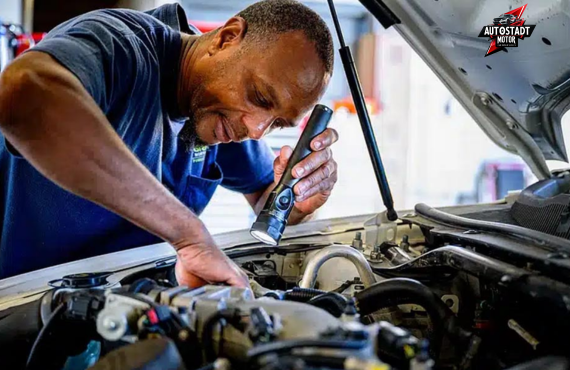
At AutoStadt Motor Services, MG coolant leak repair begins with finding the actual source of coolant loss. Rather than repeatedly topping up the reservoir, our approach is to inspect the cooling system, identify the affected component and recommend a repair based on the vehicle’s condition.
It is also important to distinguish coolant leakage from other fluid leaks. Engine oil, water from air conditioning and coolant can appear in different areas underneath a vehicle. Correct identification is therefore the first step toward an effective repair.
Signs Your Car Needs MG Coolant Leak Repair
A cooling-system leak can produce obvious symptoms, but some leaks are initially subtle. Recognizing the early warning signs can help prevent an inconvenient breakdown or expensive engine repair.
1. Coolant Level Keeps Dropping
One of the strongest indicators of a possible leak is a coolant reservoir that repeatedly becomes low.
The cooling system is designed to circulate coolant without requiring frequent topping up during normal operation. If you regularly need to add coolant, there may be a leak somewhere in the system.
The leak may be external and visible, or it may occur only when the engine is hot and the cooling system is under pressure. Therefore, the absence of a large puddle does not necessarily mean there is no leak.
2. Temperature Gauge Rises Higher Than Normal
Your MG’s temperature behaviour can provide an important warning.
If the engine temperature begins rising beyond its normal operating range, reduced coolant circulation or coolant loss may be involved. In some situations, the issue may be caused by another cooling-system component rather than the leak itself.
Nevertheless, unusual temperature readings should be investigated promptly.
Continuing to drive an overheating vehicle can turn a relatively manageable cooling-system problem into major engine damage.
3. Coolant Warning Light Appears
A warning message or dashboard light relating to coolant temperature or the cooling system should never be dismissed.
Depending on the MG model and equipment, the vehicle may provide warnings related to engine temperature or coolant level. If such a warning appears alongside visible leakage or overheating symptoms, arrange an inspection as soon as practical.
4. Sweet Smell Around the Engine Bay
Coolant can produce a distinctive smell, particularly when it comes into contact with hot engine components.
If you notice an unusual sweet or chemical-like smell after driving, especially when opening the bonnet after the vehicle has cooled sufficiently, it may indicate coolant escaping from a hose, radiator, reservoir or another component.
However, smell alone cannot identify the exact source, so a cooling-system inspection is still necessary.
5. Visible Coolant Under the Vehicle
A coloured or wet patch beneath the vehicle can be another indication of coolant loss.
The location of the fluid can provide a useful clue, but it should not be used as the only basis for diagnosis. Coolant can travel along components before dripping onto the ground, making the final puddle appear away from the original leak.
6. Steam or Vapour From the Engine Area
Steam coming from the engine compartment can indicate that coolant is escaping onto a hot surface or that the engine is overheating.
If this occurs, the vehicle should be treated as a serious cooling-system concern. Continuing to drive while steam is present can increase the risk of overheating and further damage.
7. Heater Performance Changes
The cabin heating system depends on hot engine coolant circulating through the heater system.
If the heater suddenly blows cooler air when it normally produces heat, particularly alongside a low coolant level or temperature fluctuations, a cooling-system issue may be present.
This symptom can have several possible causes, but it is useful information during diagnosis.
Why Choose AutoStadt Motor Services for MG Coolant Leak Repair
A coolant leak is not simply about replacing whatever component appears wet. The cooling system contains multiple interconnected parts, so accurate diagnosis is important.
Vehicle-Specific Cooling System Inspection
At AutoStadt Motor Services, the inspection is approached according to the MG model and its cooling-system configuration.
Different MG vehicles can have different engine layouts, cooling components and hose arrangements. Therefore, identifying the exact model and inspecting its relevant components is preferable to using a generic repair approach.
Finding Small and Intermittent Leaks
Some coolant leaks are easy to see, while others only become apparent when the engine reaches operating temperature.
A system can appear dry when cold but begin leaking once pressure and temperature increase. This is one reason why simply looking at the engine bay may not reveal the complete problem.
The cooling system may need a more detailed inspection to locate the source.
Focus on the Root Cause
A proper repair should address why the coolant is escaping.
For example, if a hose has deteriorated, replacing coolant without repairing the hose will not solve the problem. Similarly, if the radiator, water pump or thermostat housing is responsible, the repair needs to address that specific component.
AutoStadt Motor Services focuses on identifying the underlying fault before recommending the repair.
Protecting the Engine From Overheating
The biggest reason to take coolant leakage seriously is the potential effect on the engine.
Coolant helps transfer heat away from the engine. If enough coolant is lost, the cooling system may no longer be able to maintain the appropriate operating temperature.
Early intervention can therefore be much more practical than waiting for an overheating incident.
Experienced With Different Vehicle Types
Cooling-system principles are shared across many vehicles, but individual designs differ.
A Toyota may use a different cooling arrangement from an MG, while a BMW or Mercedes-Benz can have its own electronic controls and component configuration. Tesla vehicles, meanwhile, use a fundamentally different type of thermal-management architecture because they are electric vehicles.
This is why AutoStadt Motor Services approaches the vehicle according to its actual system rather than assuming every coolant problem is identical.
How Our MG Coolant Leak Repair Process Works
A reliable repair starts with diagnosis. The purpose is not merely to find coolant somewhere under the vehicle, but to determine exactly where the system is losing coolant and whether any other components have been affected.
Step 1: Discuss the Vehicle’s Symptoms
The first stage is understanding what the driver has noticed.
Important details can include how frequently the coolant level drops, whether the temperature gauge has changed, whether warning lights appear, whether there is a coolant smell and whether any fluid has been found beneath the vehicle.
These observations can help narrow down the areas that require closer inspection.
Step 2: Inspect the Coolant System
The technician checks the relevant cooling-system components.
Depending on the MG model, inspection may include the coolant reservoir, radiator, upper and lower hoses, hose connections, thermostat housing, water pump area, radiator cap, cooling fan and other related components.
Visible staining or dried coolant residue can sometimes provide clues even when an active leak is not immediately visible.
Step 3: Trace the Source of the Leak
Once signs of coolant loss are identified, the suspected area is examined more closely.
The goal is to distinguish between a leaking hose, radiator, connection, seal, reservoir or another component.
Where appropriate, pressure-based testing can help reveal leaks that are difficult to detect during a simple visual inspection.
Step 4: Assess Related Components
Finding a leak is only part of the diagnosis.
If the MG has been driven while low on coolant or running hotter than normal, other components should also be assessed. The condition of hoses, coolant circulation and related cooling components may provide important information about the vehicle’s overall condition.
If overheating has occurred, the repair strategy may need to be more comprehensive than simply replacing the leaking part.
Step 5: Repair or Replace the Faulty Component
After the cause has been confirmed, the affected component can be repaired or replaced as appropriate.
Depending on the diagnosis, this could involve a coolant hose, radiator, reservoir, thermostat-related component, water pump or another part of the cooling system.
The correct coolant specification should also be followed. Different vehicles can require different coolant types, and mixing unsuitable products can create additional problems.
Step 6: Refill and Recheck the System
Once the repair has been completed, the cooling system is restored according to the vehicle’s requirements.
The system is then checked again for signs of leakage and the vehicle’s temperature behaviour is evaluated.
This final stage is important because simply replacing a component does not confirm that the entire cooling system is operating correctly.
Preventing Future MG Cooling-System Problems
Regular maintenance can help identify cooling-system deterioration before it becomes an emergency.
During routine servicing, it is useful to check the coolant level, inspect hoses for deterioration, look for staining around connections and pay attention to unusual temperature behaviour.
Dubai’s driving environment makes these checks particularly worthwhile. Traffic can involve long periods of idling, while high outdoor temperatures can increase the importance of an efficient cooling system.
Drivers should also avoid treating repeated coolant top-ups as normal maintenance. If the coolant level keeps falling, there is a reason that needs investigation.
Similarly, never open a hot coolant reservoir or radiator system simply to check the level. A pressurized cooling system can release extremely hot coolant and cause serious burns. Allow the vehicle to cool sufficiently before carrying out any inspection.
Frequently Asked Questions About MG Coolant Leak Repair in Dubai
1. What causes an MG coolant leak?
An MG coolant leak can originate from several parts of the cooling system. Common possibilities include deteriorated coolant hoses, loose or damaged connections, radiator leaks, reservoir problems, seals, thermostat housing issues or water-pump-related leakage. The exact cause depends on the vehicle’s model, age and condition. Because coolant can spread across surrounding components, a professional inspection is preferable to diagnosing the source based only on where fluid appears underneath the car.
2. Can I drive my MG if it has a coolant leak?
Driving with a known coolant leak is generally not advisable, particularly if the coolant level is falling quickly or the engine temperature is increasing. A small leak can become significantly worse during a journey, potentially leaving the vehicle without enough coolant to control engine temperature. If your MG displays an overheating warning, produces steam, or shows a rapidly rising temperature, stop driving and allow the vehicle to cool safely before arranging professional assistance.
3. How can I tell if the fluid under my MG is coolant?
Coolant can have a distinctive colour depending on its formulation and often has a noticeable sweet or chemical-like smell. However, appearance alone is not a reliable identification method because different coolants and other automotive fluids can look different. Air-conditioning condensation, for example, can also leave clear water underneath a vehicle and is normally not a coolant leak. If you are unsure, a professional inspection can determine which system is actually leaking.
4. How much does MG coolant leak repair cost in Dubai?
There is no single price for MG coolant leak repair because the cost depends heavily on the failed component and the amount of work required. A deteriorated hose or simple connection may be relatively straightforward to repair, while radiator, water pump or other major component problems can require considerably more labour and parts. The MG model and engine configuration can also influence the final cost. A proper inspection by AutoStadt Motor Services allows the repair recommendation to be based on the confirmed cause rather than an assumption.
5. How can I prevent a coolant leak from becoming a major engine problem?
The most effective approach is to respond early to warning signs. Check for repeated coolant loss, unusual engine temperatures, coolant smells, visible leakage and warning messages. Do not repeatedly refill the coolant reservoir without investigating why the level is falling. Regular servicing can also help identify ageing hoses, damaged connections and other cooling-system issues. If your MG has already experienced overheating, it is especially important to have the vehicle inspected rather than assuming that adding coolant has completely resolved the problem.
Conclusion
MG coolant leak repair is an important service for maintaining engine reliability and preventing cooling-system problems from becoming expensive repairs. A low coolant level, visible fluid, unusual smell, temperature increase, warning light or steam from the engine compartment should all be treated seriously.
The cooling system is made up of several interconnected components, so finding the actual source of the leak is more important than simply adding coolant. Whether the problem involves a hose, radiator, reservoir, water pump, thermostat housing or another component, the correct repair depends on accurate diagnosis.
For Dubai drivers, early attention is particularly valuable because high temperatures, congestion and frequent idling can place additional demands on the vehicle’s cooling system. AutoStadt Motor Services provides professional inspection and repair support for MG cooling-system problems, helping drivers identify leaks and address the underlying cause.
If your MG is losing coolant or showing signs of overheating, arranging an inspection before the problem escalates can help protect the engine, reduce the possibility of an unexpected breakdown and keep your vehicle dependable on Dubai roads.


Leave a Comment