
Nissan heating repair is important when your vehicle’s cabin heater stops producing warm air, takes too long to heat up, or only works intermittently. Although Dubai is known for its hot climate, a properly functioning heating system still plays an important role in controlling cabin temperature, managing windshield visibility, and maintaining the overall performance of the vehicle’s HVAC system.
A Nissan heating system depends on several components working together. Depending on the model and engine configuration, these may include the heater core, coolant circuit, blower motor, thermostat, HVAC controls, temperature sensors, blend door mechanism, and related electrical components. A fault in one area can affect the entire heating system.
For Dubai drivers, a heating problem can also be connected to a cooling-system issue. Low coolant, a malfunctioning thermostat, trapped air, or a coolant leak may prevent the heater from receiving enough hot coolant. Therefore, simply replacing a heater component without identifying the underlying cause can lead to repeated problems.
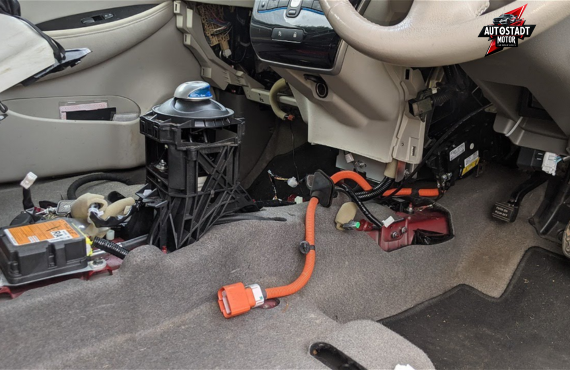
At AutoStadt Motor Services, Nissan heating problems are approached through proper diagnosis rather than guesswork. Our technicians inspect the heating, cooling, electrical, and HVAC-related components to identify what is actually causing the problem. Whether you drive a Nissan Altima, Patrol, X-Trail, Sunny, or another Nissan model, the goal is to restore dependable cabin temperature control and prevent a small fault from developing into a larger repair.
Signs Your Car Needs Nissan Heating Repair
Heating problems can develop gradually, so drivers sometimes continue using the vehicle without realizing that an important HVAC or cooling-system component is beginning to fail. Recognizing the early warning signs can make diagnosis easier and potentially reduce repair costs.
Heater Produces Cold or Lukewarm Air
One of the clearest signs is when the heater blows air but the air remains cold or only slightly warm even after the engine reaches normal operating temperature.
This may be related to low coolant, restricted coolant circulation, a thermostat problem, a blocked heater core, or an issue with the HVAC temperature-control mechanism. In some cases, the blower is working normally while the heating side of the system is not.
If your Nissan repeatedly produces lukewarm air, professional Nissan heating repair can determine whether the issue is related to the heating system itself or another engine cooling component.
Heating Takes Too Long to Work
If your Nissan previously produced warm air quickly but now requires considerably more driving before the cabin becomes comfortable, there may be a problem with coolant circulation or engine temperature regulation.
A thermostat that remains open for too long, for example, can prevent the engine from reaching its intended operating temperature efficiently. Consequently, the heater may struggle to provide consistent warmth.
Temperature Changes Without Warning
Another warning sign is inconsistent cabin temperature. The air may initially become warm and then suddenly turn cool, or the temperature may fluctuate while driving.
This can happen because of coolant-level problems, air trapped in the cooling system, a restricted heater core, or a malfunctioning temperature-control component. Intermittent heating should not automatically be treated as a minor electrical problem because the underlying cause may involve the cooling system.
Weak Airflow From the Vents
Sometimes the air is warm, but very little air actually reaches the cabin. In this situation, the heating element may be functioning correctly while the ventilation side has a problem.
A clogged cabin air filter, weak blower motor, blower resistor fault, damaged ductwork, or HVAC control issue can reduce airflow. Replacing the heater core would not solve this type of problem, which is why proper inspection matters.
Unusual Smell Inside the Cabin
A sweet or unusual smell coming through the vents can indicate a coolant-related problem. In some cases, coolant may be leaking from or around the heater core and entering the cabin area.
Other symptoms may include unusual window fogging or dampness around the passenger-side footwell. These signs deserve attention because a coolant leak can affect both cabin comfort and the vehicle’s engine cooling system.
Engine Temperature Problems Along With Weak Heating
If the heater is not working properly and the engine temperature is also behaving unusually, the problem may extend beyond the cabin HVAC system.
Low coolant, thermostat failure, cooling-system restrictions, or other faults can affect both engine temperature and heater performance. Continuing to drive when the engine is overheating can cause considerably more serious mechanical damage.
Why Choose AutoStadt Motor Services for Nissan Heating Repair
Choosing a workshop for Nissan heating repair is not simply about getting warm air from the vents. The important part is finding the reason the heating system has stopped working correctly.
Diagnostic Inspection Before Repair
At AutoStadt Motor Services, the repair process begins by understanding the symptoms. Our technicians can inspect coolant level and condition, engine operating temperature, heater performance, airflow, HVAC controls, and relevant electrical components.
This helps separate a genuine heater problem from related cooling-system or ventilation faults.
Nissan-Focused Troubleshooting
Different Nissan models can use different HVAC layouts and component configurations. A Nissan Patrol does not necessarily have the same heating-system arrangement as a Nissan Sunny or X-Trail.
For that reason, the diagnostic approach should consider the specific model, symptoms, and vehicle condition rather than applying the same repair method to every Nissan.
Cooling-System Checks
The heating system and engine cooling system are closely connected in many Nissan vehicles. Therefore, checking the coolant circuit can be an important part of the diagnosis.
If low coolant is caused by a leak, simply topping up the reservoir may provide only temporary relief. The source of the coolant loss needs to be identified and repaired.
Professional Component Inspection
Depending on the symptoms, inspection may include the heater core, thermostat, coolant hoses, radiator-related components, blower motor, cabin filter, temperature sensors, HVAC controls, and blend-door operation.
This approach helps ensure that the repair addresses the actual fault instead of replacing unrelated parts.
Service for Different Nissan Models
Dubai drivers use Nissan vehicles for commuting, family transportation, long-distance travel, and daily business activities. AutoStadt Motor Services can assist with heating and HVAC-related concerns across different Nissan models while adapting the inspection to the individual vehicle.
The same diagnostic principle also applies when inspecting heating-related problems on vehicles from brands such as Toyota, BMW, Mercedes-Benz, or Audi: identify the underlying fault before deciding which component needs replacement.
How Our Nissan Heating Repair Process Works
Initial Symptom Assessment
The process begins with a discussion about what you have noticed. For example, you may report that the heater is completely cold, works only while driving, produces inconsistent temperatures, or has recently developed an unusual smell.
These details provide useful clues before physical inspection begins.
HVAC and Coolant-System Inspection
The vehicle is then inspected to determine whether the problem is related to coolant circulation, temperature regulation, airflow, electrical controls, or another HVAC component.
Coolant level and visible leaks are checked, while the engine’s operating temperature is considered as part of the diagnosis.
Heater Core and Coolant Flow Evaluation
If the engine reaches normal operating temperature but the heater remains cold, coolant flow through the heater circuit may need to be evaluated.
A restricted heater core can reduce heat transfer, while air trapped inside the cooling system can also interfere with proper circulation.
Thermostat and Temperature Regulation Check
The thermostat controls coolant circulation according to engine temperature. If it is stuck open or closed, the vehicle may experience unusual temperature behavior.
A thermostat-related problem can therefore affect both engine temperature management and cabin heating performance.
Blower and Airflow Testing
If the air is warm but airflow is weak, attention shifts toward the ventilation side. The blower motor, cabin filter, resistor, ducts, and related controls may be examined.
This distinction is important because poor airflow and poor heat production are different problems and require different solutions.
HVAC Control and Electrical Diagnosis
Modern Nissan vehicles can include electronically controlled HVAC functions. Sensors, switches, actuators, wiring, and control modules may influence temperature selection and airflow direction.
If the mechanical components appear normal but the system does not respond correctly to temperature commands, electrical and electronic diagnosis becomes necessary.
Repair or Component Replacement
Once the cause has been identified, AutoStadt Motor Services can recommend the appropriate repair. Depending on the diagnosis, this may involve correcting a coolant leak, replacing a thermostat, servicing the blower system, addressing a heater-core restriction, repairing a control issue, or replacing a failed component.
The objective is to repair the actual problem rather than simply treating the symptom.
Final Testing
After the repair, the heating system should be tested under appropriate operating conditions. Temperature output, airflow, coolant behavior, and HVAC controls can be checked to confirm that the system is functioning correctly.
This final step helps ensure that the vehicle leaves the workshop with the original heating complaint properly addressed.
Frequently Asked Questions About Nissan Heating Repair in Dubai
1. Why is my Nissan heater blowing cold air?
A Nissan heater can blow cold air for several reasons. Low coolant, a faulty thermostat, restricted heater-core circulation, trapped air, HVAC control problems, or other cooling-system faults can all affect cabin heat. If the engine itself is not reaching its normal operating temperature, the thermostat may require inspection. Because different faults can produce similar symptoms, a proper diagnosis is preferable to replacing parts based only on the symptom.
2. Can low coolant cause my Nissan heater to stop working?
Yes, low coolant can affect heater performance in vehicles where engine coolant supplies heat to the heater core. When coolant is insufficient, circulation through the heater circuit may be reduced, resulting in weak or cold air from the vents.
However, low coolant is usually a symptom that requires investigation. If the level keeps dropping, there may be a leak in a hose, radiator-related component, water pump area, heater circuit, or another part of the cooling system. AutoStadt Motor Services can inspect the system to identify the reason for coolant loss.
3. How do I know whether the problem is the heater core or the blower motor?
The symptoms can help provide an initial indication. If airflow is strong but remains cold, the issue may involve heat production or coolant circulation, including the heater core. If the air becomes warm but airflow is extremely weak or absent, the blower motor, cabin filter, resistor, electrical supply, or ventilation system may need inspection.
Because multiple components can produce similar symptoms, a complete HVAC inspection is the safest way to distinguish between them.
4. Is Nissan heating repair necessary in Dubai even though the weather is hot?
Yes. Although heating is used less frequently in Dubai than in colder climates, the heating and HVAC system remains part of the vehicle’s overall temperature-management and ventilation system. Some components also interact with the engine cooling system.
Furthermore, a heating fault can sometimes reveal a coolant or thermostat problem. Addressing the issue early can help prevent a relatively manageable HVAC or cooling-system fault from becoming a more expensive mechanical problem.
5. How long does Nissan heating repair take?
The repair time depends entirely on the cause. A simple cabin filter or electrical issue may require considerably less time than a heater-core replacement or cooling-system repair. Diagnosis itself can also take different amounts of time depending on how clearly the symptoms identify the faulty component.
At AutoStadt Motor Services, the vehicle can first be inspected to determine the actual fault. Once the required repair is identified, you can be given a clearer understanding of the work involved before proceeding.
Conclusion
Nissan heating repair should focus on finding the reason behind poor cabin heating rather than simply replacing a component. Cold air, weak airflow, inconsistent temperature, unusual smells, coolant loss, and abnormal engine temperature can all provide useful clues about the condition of the vehicle.
Because the heating system can be connected to the engine cooling system, HVAC controls, electrical components, and ventilation system, accurate diagnosis is especially important. Ignoring the warning signs may allow a coolant or mechanical issue to become more serious.
For Nissan owners in Dubai, AutoStadt Motor Services provides professional inspection and repair support for heating, HVAC, cooling-system, and related vehicle concerns. Whether your Nissan has weak heat, inconsistent temperature, poor airflow, or another heating-related problem, a proper inspection can identify the underlying cause and help restore dependable vehicle performance.


Leave a Comment