
Subaru Electrical Repair is essential when your vehicle starts showing warning lights, battery problems, starting difficulties, lighting issues, or unusual electrical behavior. Modern Subaru vehicles rely on a network of electronic control units, sensors, wiring systems, charging components, and computerized safety features. When one component develops a fault, the problem can affect several systems at once.
Dubai’s high temperatures, heavy traffic, frequent short journeys, and demanding driving conditions can place additional stress on automotive electrical components. A weak battery, damaged wiring connection, failing alternator, faulty starter motor, or malfunctioning sensor should therefore be diagnosed before it develops into a more expensive breakdown.
At AutoStadt Motor Services, Subaru owners can get professional electrical diagnostics and repair services designed around the actual cause of the problem. Rather than replacing parts based only on symptoms, our technicians inspect the vehicle’s electrical system, identify the underlying fault, and recommend the appropriate repair.
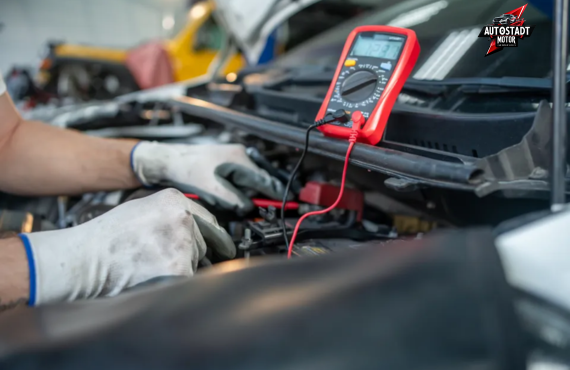
Whether you drive a Subaru Forester, Outback, Impreza, WRX, or another model, timely electrical maintenance can help preserve reliability and prevent unexpected problems on Dubai roads.
Signs Your Car Needs Subaru Electrical Repair
Electrical problems do not always begin with a complete breakdown. In many cases, your Subaru provides warning signs that something within the electrical system is becoming unreliable. Recognizing these symptoms early can help you avoid further damage.
1. Difficulty Starting the Engine
If your Subaru takes longer than usual to start, clicks when you turn the key, or requires multiple attempts before the engine starts, the battery or starter system may need inspection. However, the problem could also involve the alternator, electrical connections, starter relay, or wiring.
A professional Subaru electrical inspection can determine whether the battery is losing its charge or another component is responsible.
2. Battery Keeps Going Flat
A battery that repeatedly loses charge should not simply be replaced without investigating the reason. The charging system may not be working correctly, or an electrical component could be drawing power while the vehicle is parked.
Technicians can test battery condition, alternator output, charging voltage, and parasitic electrical draw to identify the source.
3. Dashboard Warning Lights
Modern Subaru models use electronic monitoring systems to detect problems throughout the vehicle. Warning lights may indicate issues involving the charging system, engine electronics, sensors, ABS, or other components.
Ignoring a warning light can allow a minor electrical fault to develop into a larger mechanical or electronic problem. Diagnostic scanning combined with physical inspection provides a more accurate diagnosis.
4. Flickering or Dim Headlights
Headlights that flicker, become unusually dim, or change brightness while driving may indicate an unstable electrical supply. Possible causes include a weak battery, alternator problem, poor ground connection, damaged wiring, or a faulty lighting component.
Because reliable lighting is especially important during nighttime driving in Dubai, these symptoms should be checked promptly.
5. Power Windows or Locks Stop Working
Electrical accessories such as power windows, central locking, mirrors, interior lights, and switches can develop faults independently or because of a wider electrical problem.
For example, one malfunctioning window may require a switch or motor inspection, while multiple accessories failing simultaneously could indicate a fuse, wiring, module, or power supply issue.
6. Unusual Electrical Behavior
Strange electrical symptoms should never be ignored. These can include radio systems turning off unexpectedly, interior lights staying on, warning messages appearing without an obvious reason, or electronic features behaving inconsistently.
Such symptoms can sometimes be caused by loose connections, water intrusion, damaged wiring, weak voltage, or communication faults between electronic modules.
Why Choose AutoStadt Motor Services for Subaru Electrical Repair
Choosing the right workshop matters because automotive electrical systems can be difficult to diagnose without suitable equipment and experience. Replacing parts without confirming the actual cause can increase repair costs without solving the problem.
AutoStadt Motor Services approaches Subaru electrical repair through systematic diagnosis. Our technicians assess the symptoms first and then inspect the relevant components to determine what is actually causing the fault.
Experienced Electrical Diagnostics
Electrical problems can originate from several interconnected components. Our diagnostic process considers the battery, alternator, starter, fuses, relays, wiring, connectors, sensors, and electronic control systems where appropriate.
This approach helps reduce unnecessary component replacement and gives Subaru owners a clearer understanding of the repair required.
Advanced Diagnostic Scanning
Computerized diagnostic equipment can retrieve fault codes stored within the vehicle’s control modules. However, diagnostic codes should not automatically be treated as proof that a particular part has failed.
At AutoStadt Motor Services, diagnostic information is used alongside electrical testing and visual inspection. This provides a more reliable basis for deciding whether a component needs repair, adjustment, or replacement.
Focus on the Root Cause
A battery may appear to be the problem when the real issue is a failing alternator. Similarly, a malfunctioning electrical accessory may actually be affected by a poor ground connection.
That is why proper Subaru electrical repair involves identifying the root cause instead of simply treating the most obvious symptom.
Suitable for Different Subaru Models
Subaru vehicles have different electrical configurations depending on model, year, engine, and equipment level. A Forester’s electrical requirements can differ from those of a WRX or Outback.
Our technicians take the vehicle’s specifications and symptoms into consideration before recommending repairs.
Professional Service for Dubai Conditions
Dubai’s heat can accelerate battery deterioration and place considerable demand on cooling and electrical systems. Frequent use of air conditioning and extended periods of traffic can also increase the workload on the charging system.
Regular inspection is therefore a sensible part of preventative vehicle maintenance for Subaru owners in the UAE.
How Our Subaru Electrical Repair Process Works
A structured diagnostic process makes electrical repair more efficient and helps avoid unnecessary work. At AutoStadt Motor Services, the process generally begins with understanding the driver’s complaint and then narrowing down the possible causes.
Step 1: Initial Vehicle Assessment
We first discuss the symptoms with the vehicle owner. Details such as when the issue occurs, whether it happens during startup, and whether multiple electrical systems are affected can provide valuable diagnostic information.
The vehicle is then visually inspected for obvious signs of damaged wiring, corrosion, loose terminals, blown fuses, or other problems.
Step 2: Battery and Charging System Testing
The battery is checked to determine its condition and available starting power. Charging-system testing is also important because the alternator must maintain the correct electrical supply while the engine is running.
If the battery is weak, technicians determine whether it is genuinely worn out or simply not being charged correctly.
Step 3: Computer Diagnostic Scan
The Subaru’s electronic systems may be scanned for stored fault codes and abnormal readings. This can help identify areas requiring closer inspection.
However, the scan is only one part of the diagnosis. Physical testing is used to confirm whether a suspected component is actually responsible.
Step 4: Wiring, Fuse and Connection Inspection
Electrical faults can occur because of damaged insulation, loose connectors, corrosion, blown fuses, poor grounding, or broken wires.
The affected circuit is therefore inspected carefully. This is particularly important when the fault appears intermittent.
Step 5: Component Testing
Depending on the symptoms, technicians may test the starter motor, alternator, switches, relays, motors, sensors, lighting circuits, or other electrical components.
Testing the individual component helps establish whether repair or replacement is necessary.
Step 6: Repair and Verification
Once the cause has been identified, the required repair is carried out. Afterward, the system is tested again to confirm that the original problem has been resolved.
This final verification is important because an electrical repair should restore proper operation rather than simply remove a warning temporarily.
Subaru Electrical Repair Compared With Other Vehicles
Every vehicle has its own electrical architecture and diagnostic requirements. A Toyota may experience battery or charging problems under different operating conditions, while a Nissan may develop issues involving sensors, switches, or electronic modules.
Similarly, BMW and Mercedes vehicles can contain highly integrated electronic systems requiring specialized diagnostic procedures. Tesla vehicles take a different approach because of their electric powertrain and extensive software-controlled systems.
Subaru vehicles also combine conventional electrical components with sophisticated electronic control systems. Therefore, using a generic trial-and-error repair approach is not ideal.
For Dubai Subaru owners, choosing a workshop familiar with automotive electrical diagnostics can make the repair process more efficient and reduce the risk of unnecessary part replacement.
Frequently Asked Questions About Subaru Electrical Repair in Dubai
1. How do I know if my Subaru has an electrical problem?
Common symptoms include difficulty starting, repeated battery discharge, flickering lights, warning indicators, malfunctioning power windows, central locking problems, and unexpected electronic behavior.
However, similar symptoms can have different causes. A slow start, for example, may be related to the battery, alternator, starter motor, wiring, or electrical connections. Professional diagnosis is therefore recommended instead of assuming which part has failed.
2. How much does Subaru Electrical Repair cost in Dubai?
The cost depends on the nature of the electrical fault and the component involved. A simple fuse, battery connection, or wiring repair may require significantly less work than diagnosing a control module, alternator, starter, or complex electrical circuit.
At AutoStadt Motor Services, the appropriate repair can be determined after inspecting and diagnosing the vehicle. This helps provide a more accurate estimate instead of quoting a price without knowing the actual fault.
3. Can extreme Dubai heat damage Subaru electrical components?
High temperatures can contribute to faster battery deterioration and can place additional stress on electrical and electronic components. Heat can also affect connections, wiring insulation, and other components over time.
Regular battery checks, charging-system inspections, and general vehicle maintenance can help identify developing problems before they result in an unexpected breakdown.
4. Should I replace my Subaru battery if it keeps going flat?
Not necessarily. A battery that repeatedly goes flat may be old, but another electrical problem could be responsible.
The alternator may not be charging correctly, or an electrical circuit could continue consuming power while the vehicle is switched off. A proper battery and charging-system test, followed by a parasitic draw check where necessary, can help establish the real cause.
Replacing the battery without finding the underlying problem may only provide a temporary solution.
5. How often should I have my Subaru electrical system inspected?
There is no single interval that applies to every Subaru because vehicle age, mileage, usage, climate, and component condition all influence electrical reliability.
However, an inspection is particularly worthwhile before long journeys, when the battery is showing signs of weakness, after repeated starting problems, or whenever dashboard warning lights and electrical irregularities appear.
For Dubai drivers, preventative inspections can be especially useful because high temperatures and heavy air-conditioning use place additional demands on the vehicle.
Conclusion
Subaru Electrical Repair should be approached as a diagnostic service rather than simply a process of replacing electrical components. Battery problems, starting issues, warning lights, flickering headlights, power accessory failures, and unusual electronic behavior can have several possible causes.
For Subaru owners in Dubai, early diagnosis can prevent a small electrical fault from becoming an inconvenient roadside breakdown. From battery and alternator testing to wiring inspection, computerized diagnostics, starter testing, and electrical component repair, each part of the system should be assessed according to the vehicle’s symptoms.
AutoStadt Motor Services provides a professional approach to Subaru electrical diagnostics and repair, helping drivers understand the cause of their vehicle’s problem before unnecessary repairs are performed. Whether you own a Subaru Forester, Outback, WRX, Impreza, or another model, addressing electrical symptoms promptly can help maintain dependable performance.
If your Subaru is showing warning lights, struggling to start, losing battery power, or experiencing inconsistent electrical behavior, arranging a professional inspection is a practical next step. Proper diagnosis today can help protect your vehicle’s reliability and keep you driving confidently across Dubai.


Leave a Comment